EUROAIRPORT BASEL
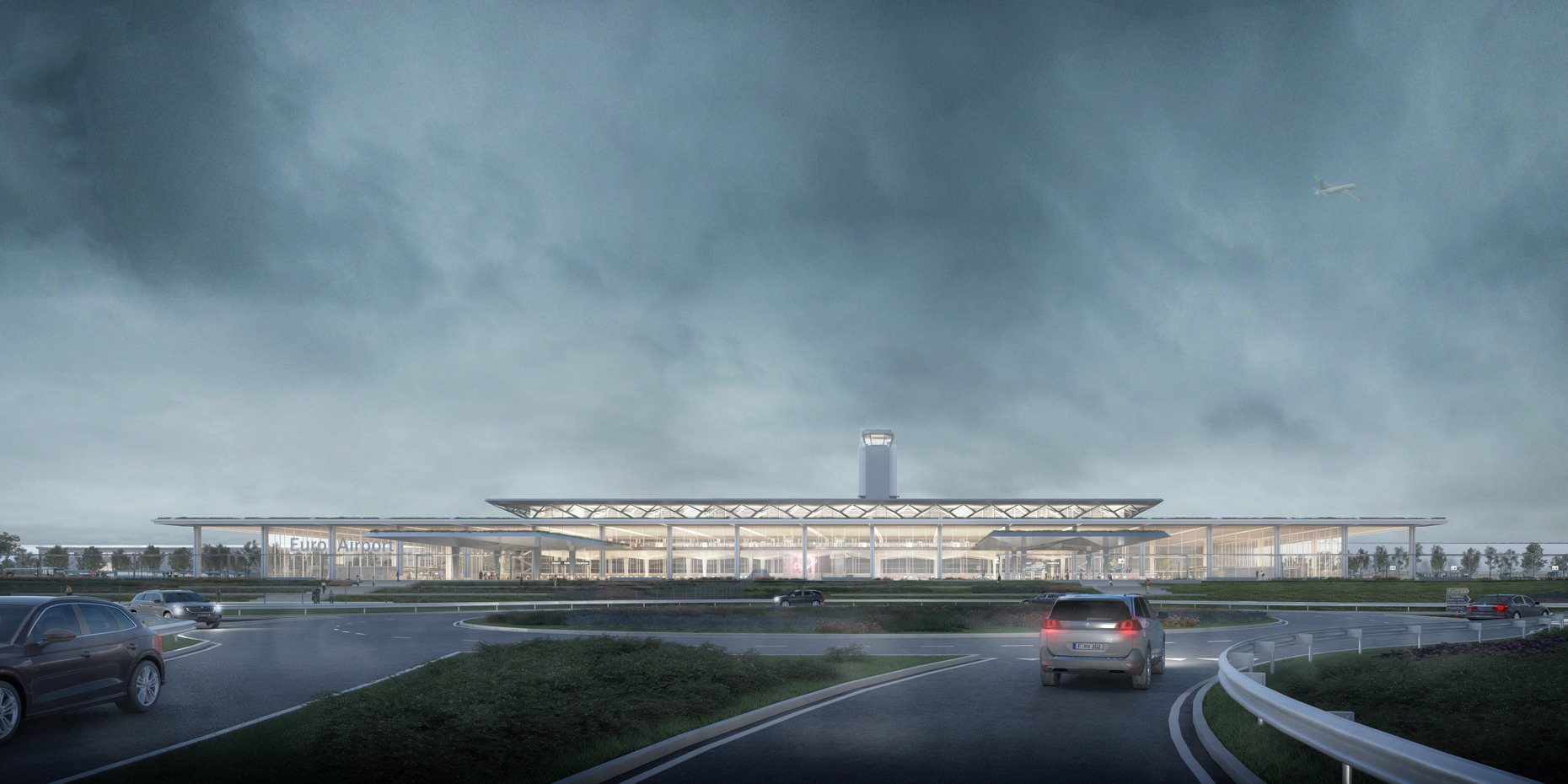
The design for the extension of EuroAirport Basel–Mulhouse–Freiburg by Benthem Crouwel Architects brings the diverse components of an airport together in a natural and self-evident way within a single building. An airport is a place of arrival and departure, of farewell and reunion, of looking back and looking ahead- accommodated by functional, commercial, cultural and security-related facilities.
A SENSE OF PLACE THROUGH SPECTACULAR SIMPLICITY
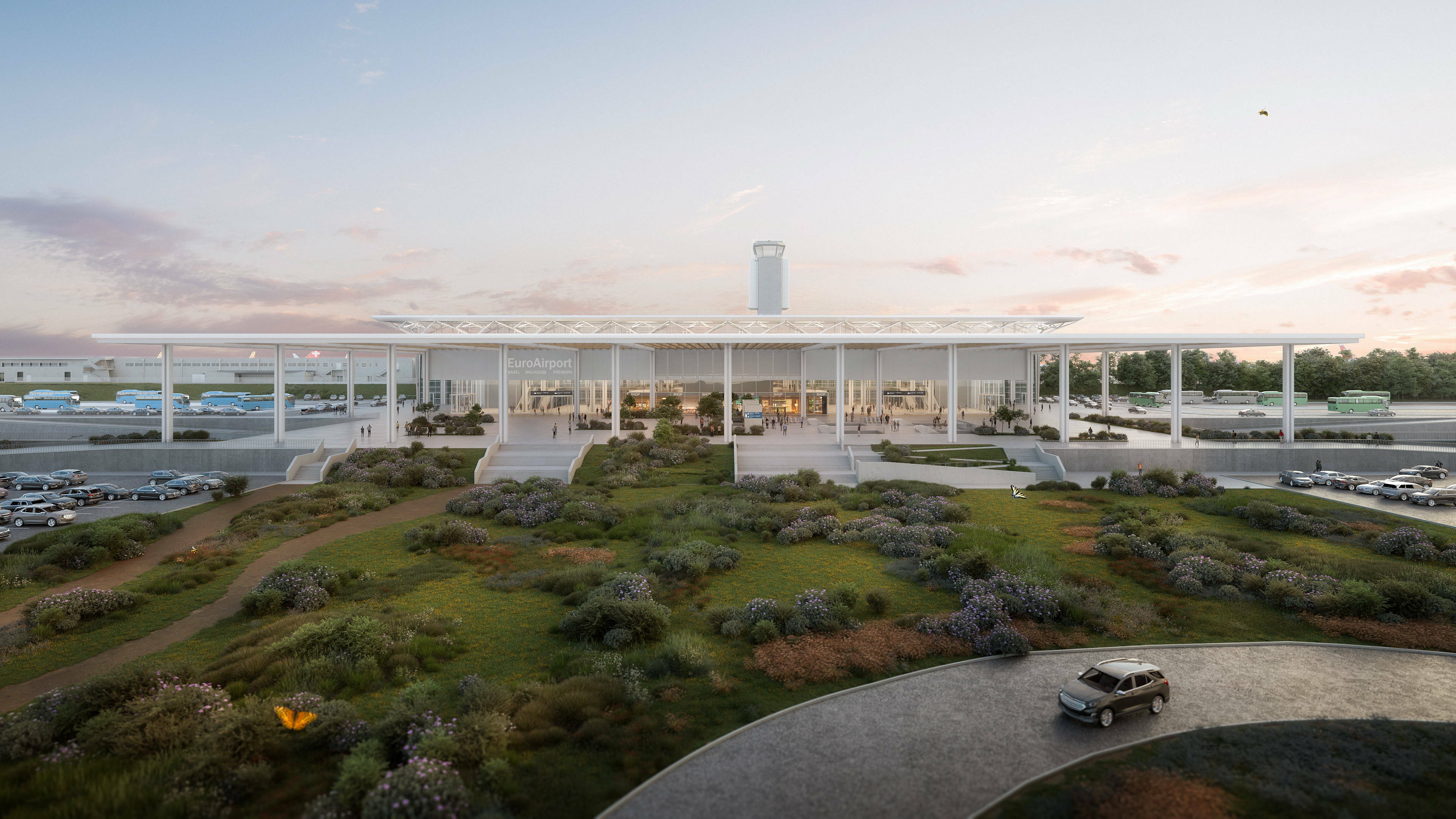
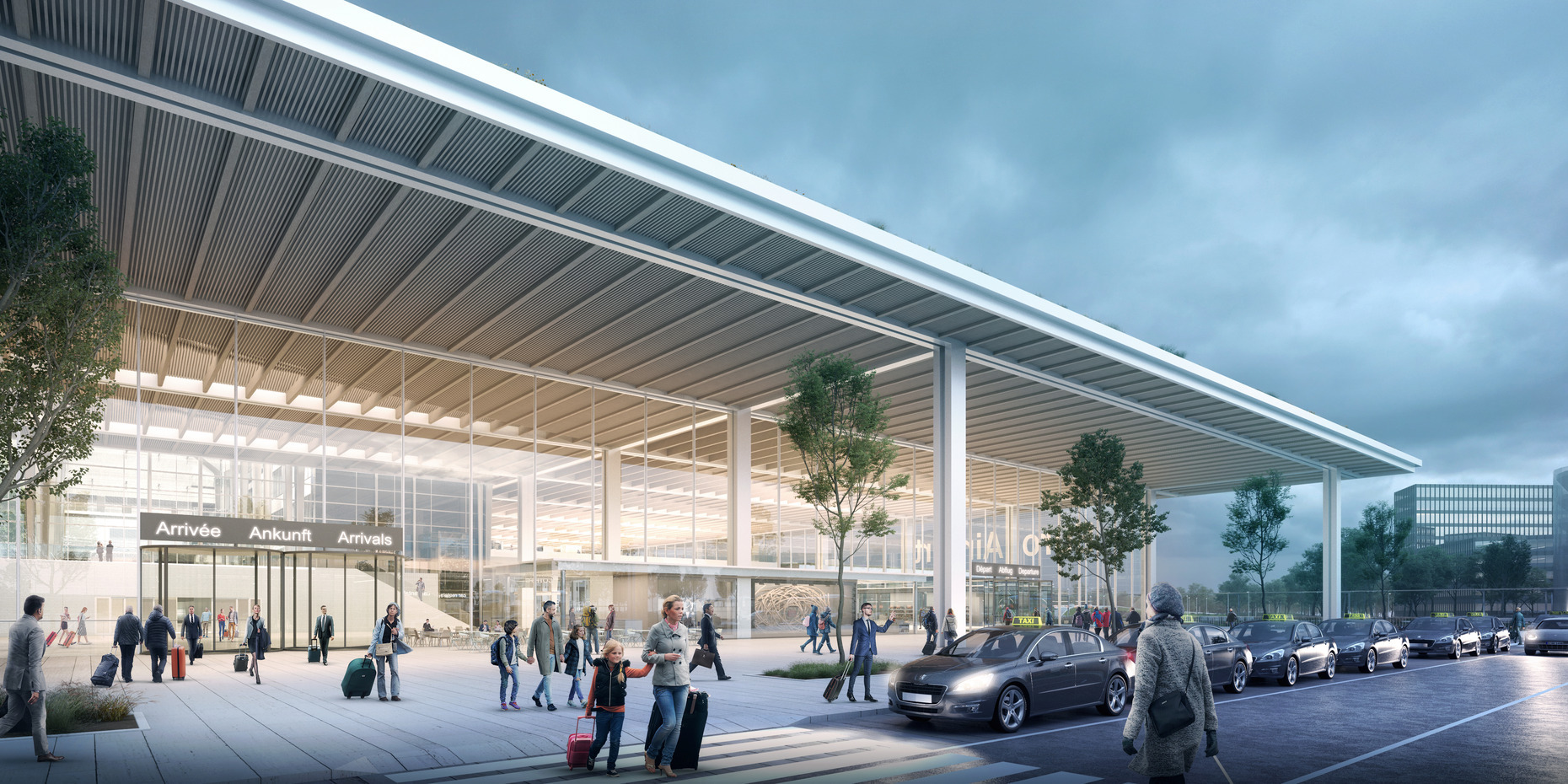
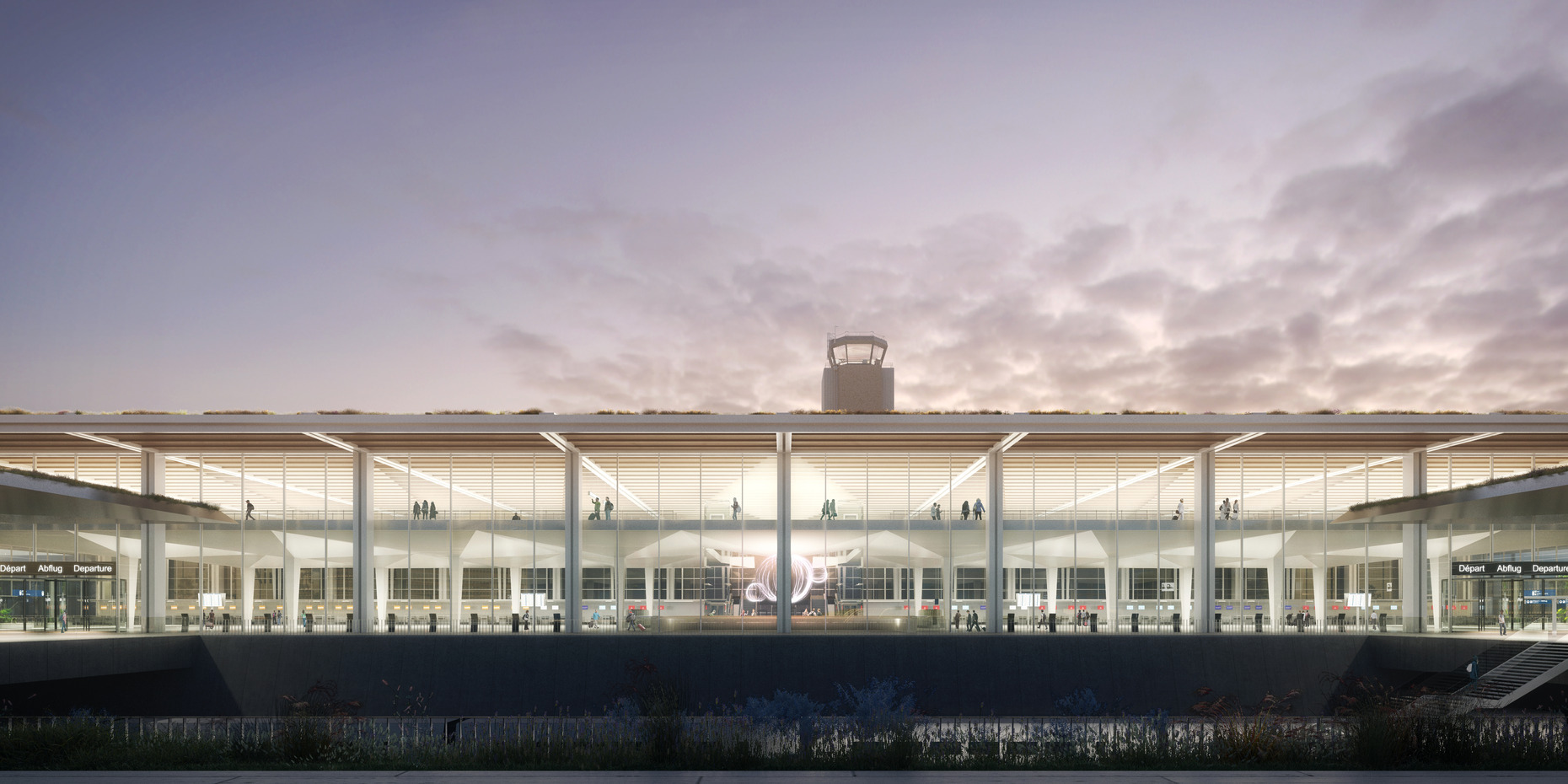
At the airport, intuitive passenger flows take precedence: clear and legible spaces, straightforward routing and seamless movement. These are enabled by a coherent and refined architecture that offers passengers an optimal experience and airlines an efficient operation. The complexity of the airport is translated optimally and efficiently into a single, unifying solution: one gesture that encompasses everything, one architectural intervention that is clearly recognizable as an addition to the existing complex.
The new extension enters into a dialogue with the existing airport buildings, creating not only a robust, safe and contemporary airport, but also a strong sense of place.
MAKING THE UNIQUE TWO-COUNTRY STATUS TANGIBLE
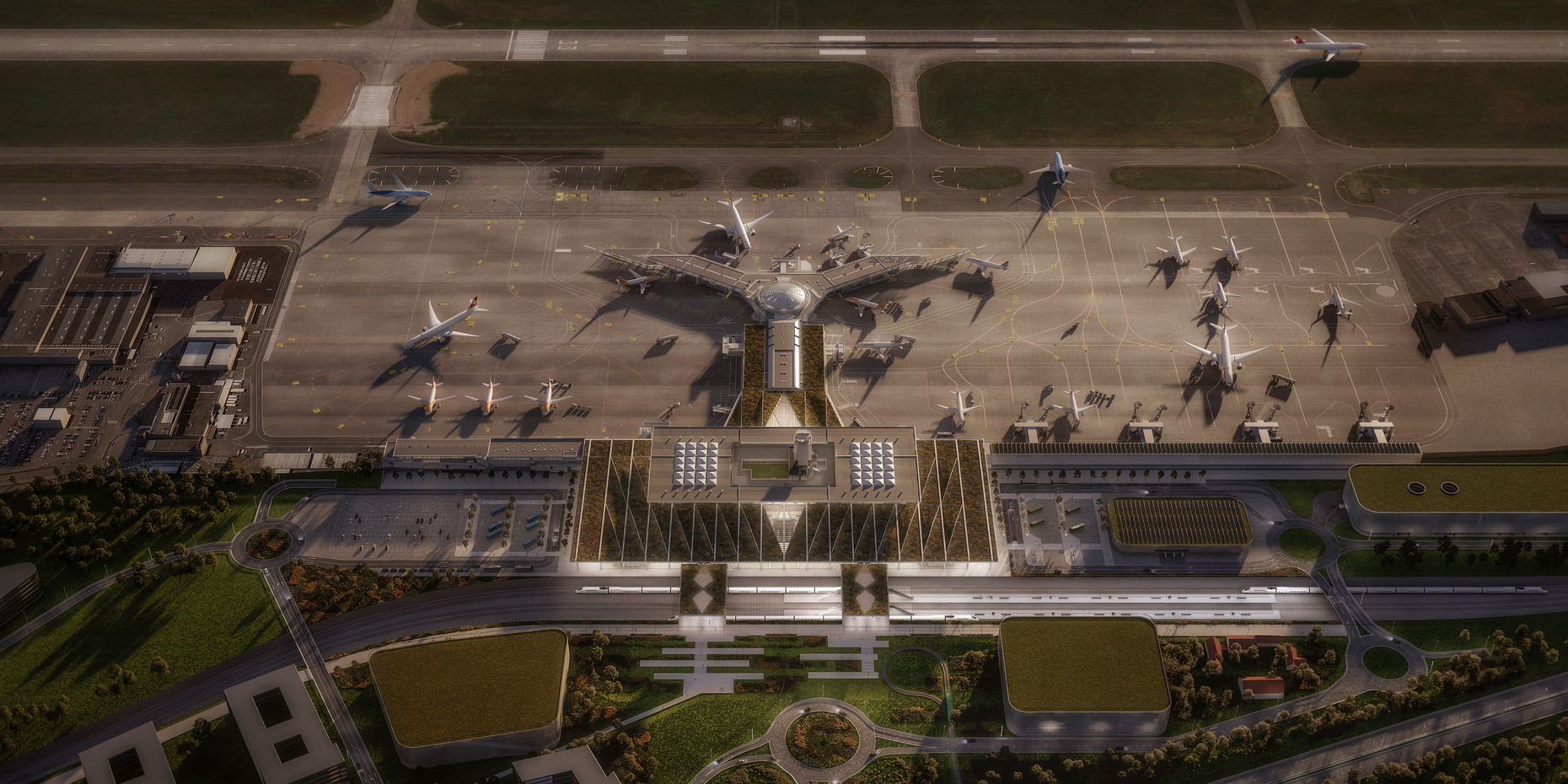
What makes EuroAirport unique is its position between Switzerland, France and Germany, and its physical division between two countries. Rather than treating the national border as a separation, the design brings the Swiss and French sectors together. Supported by architecture, spatial experience and efficient functionality, the symbolism of the border becomes tangible for passengers, both on departure and arrival.
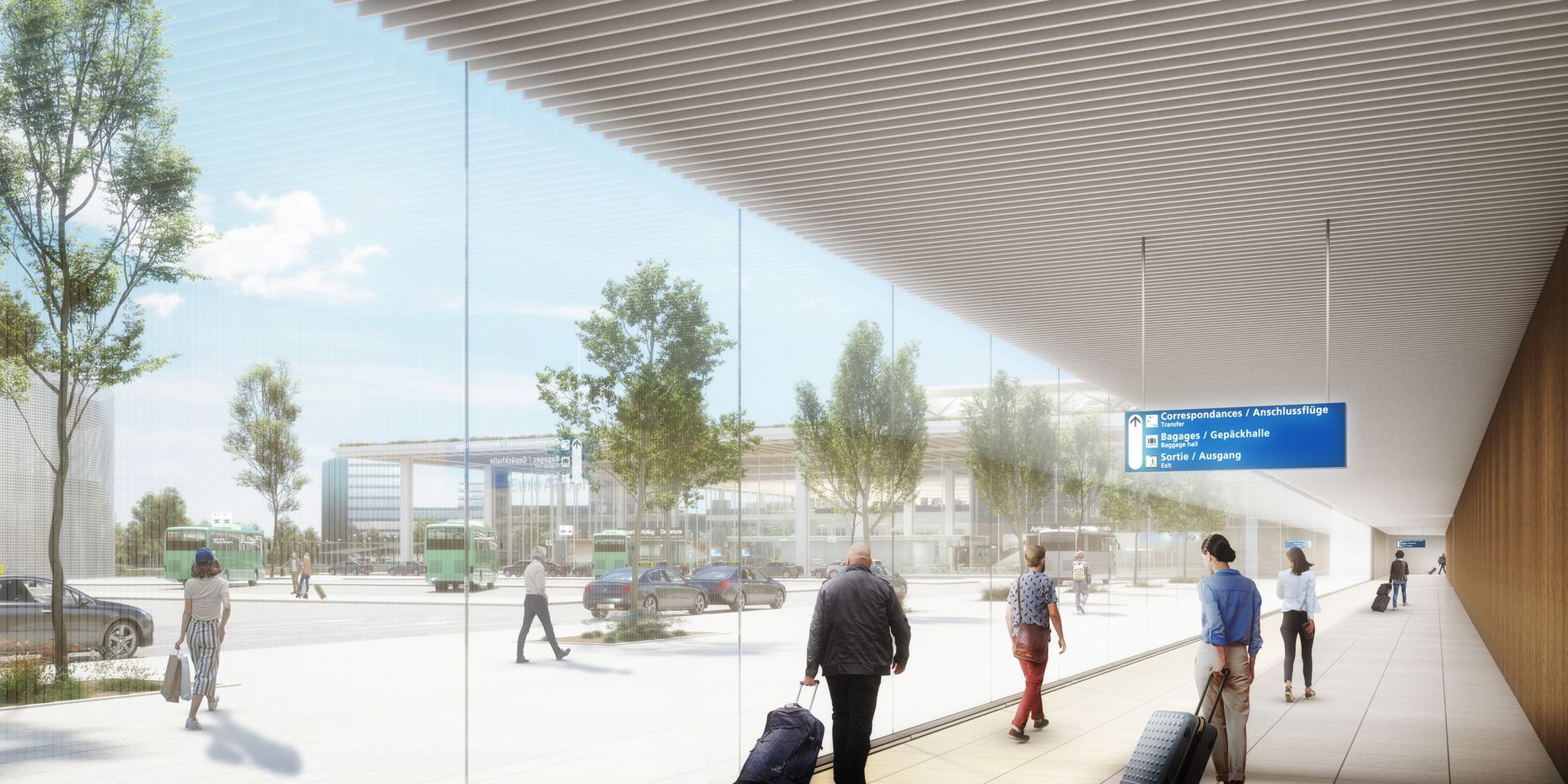
For departing passengers, a single central vertical circulation point in the multimodal hall forms a visible focal point: the border is no longer a dividing line, but a place of connection and equality. Arriving passengers are offered spectacular views from the heart of the shared baggage reclaim hall towards both exits—to Switzerland and to France.
OPERATIONAL EFFECTIVENESS, FLEXIBILITY AND RESILIENCE
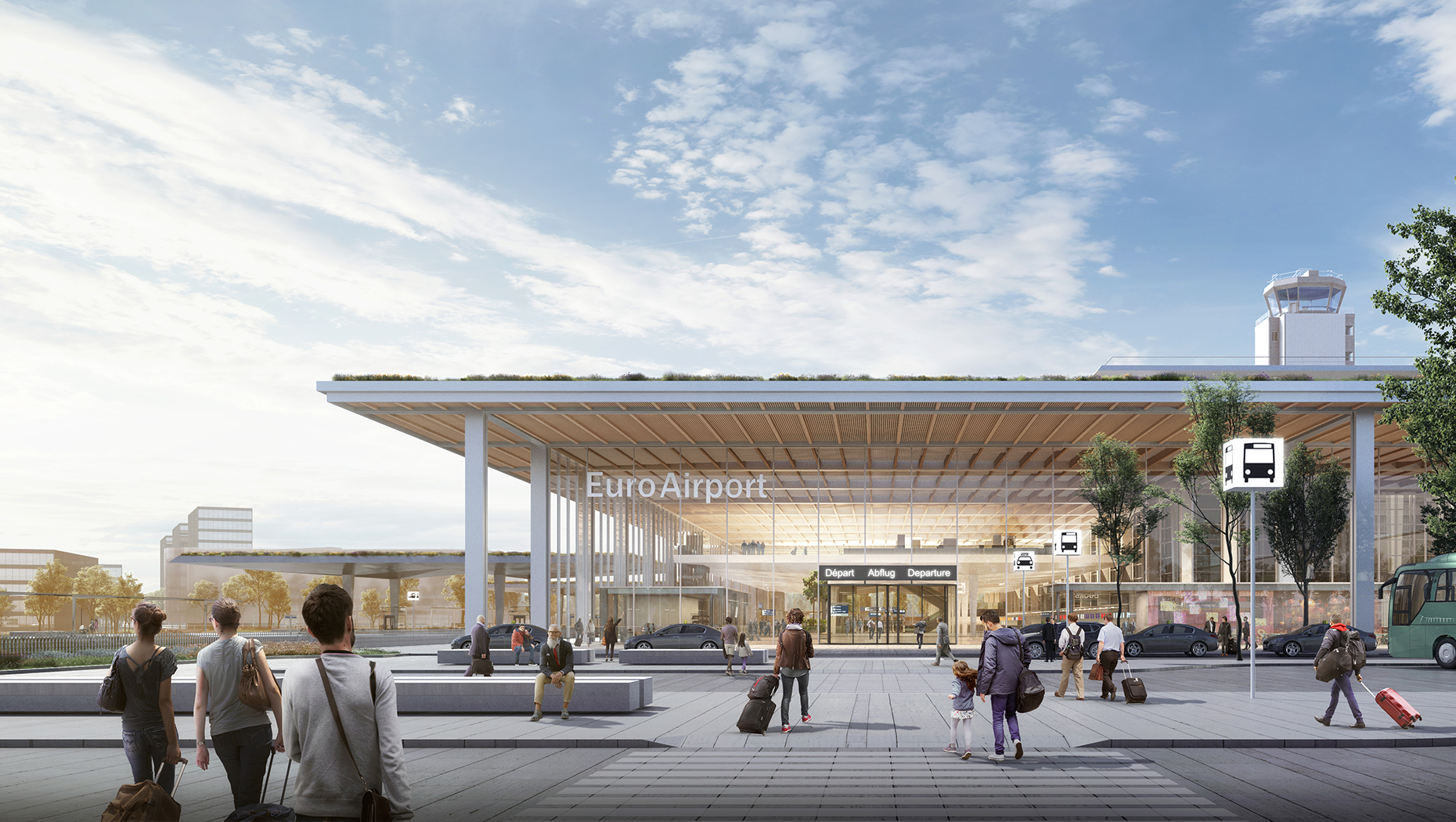
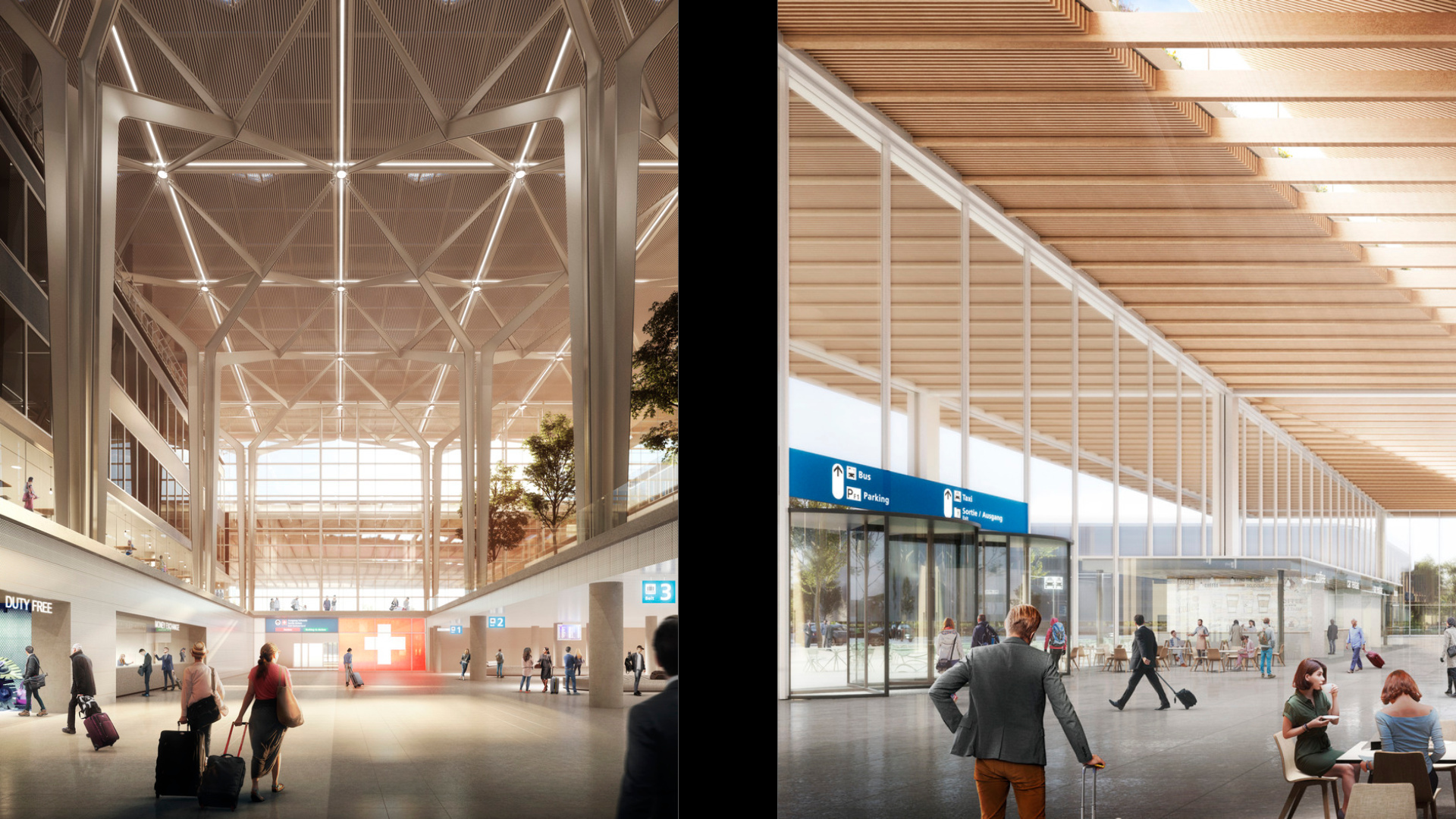
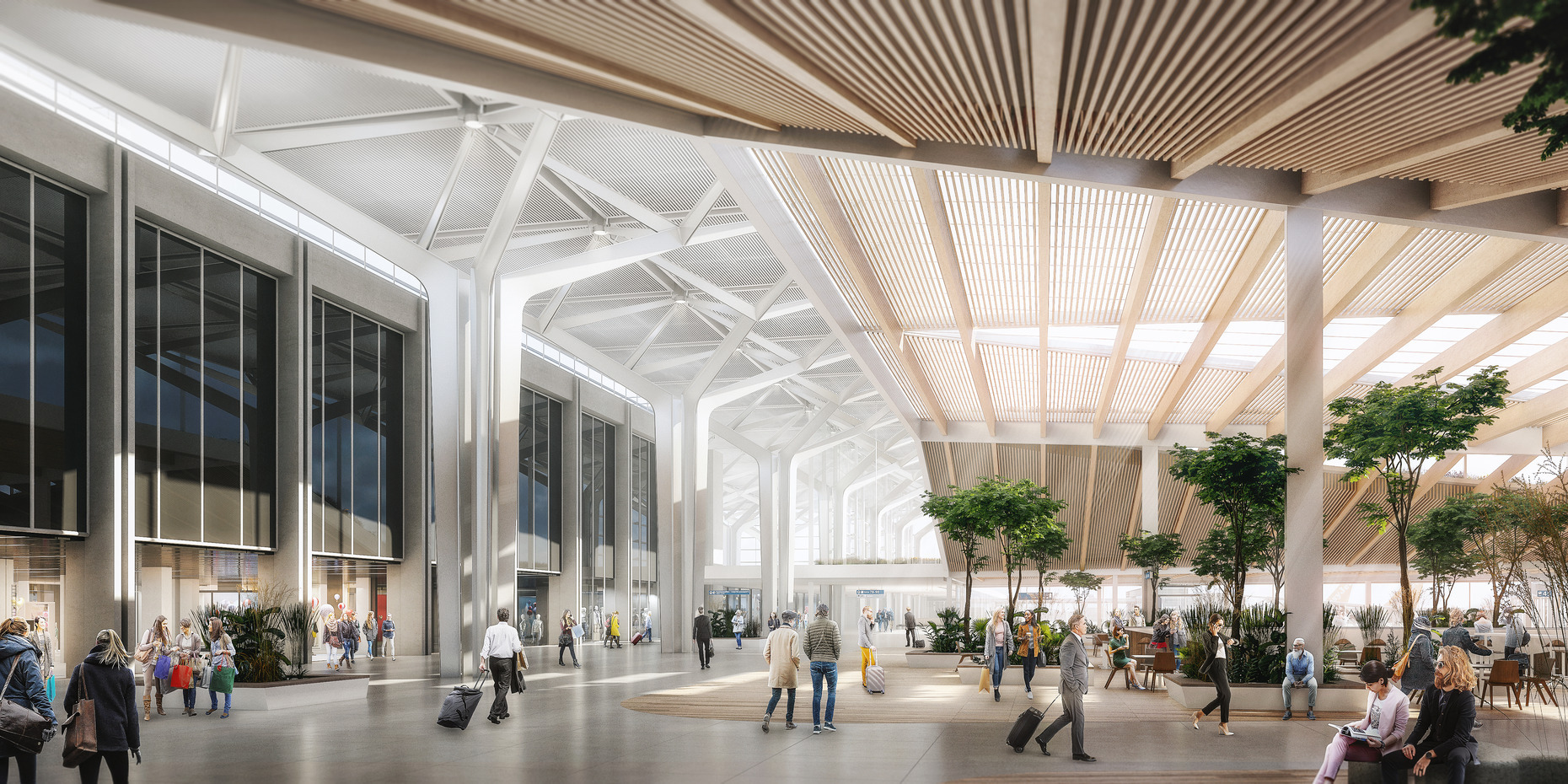
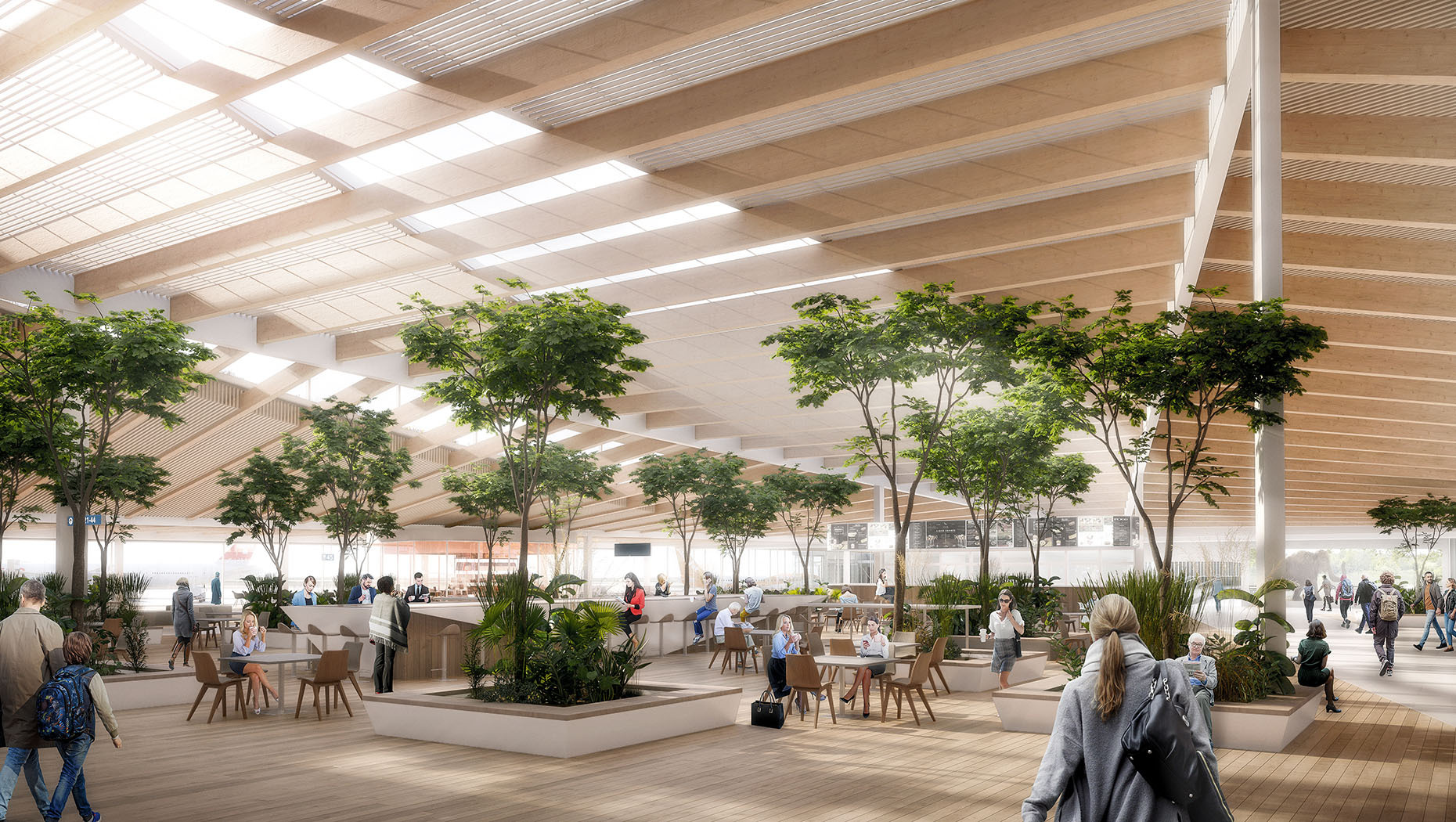
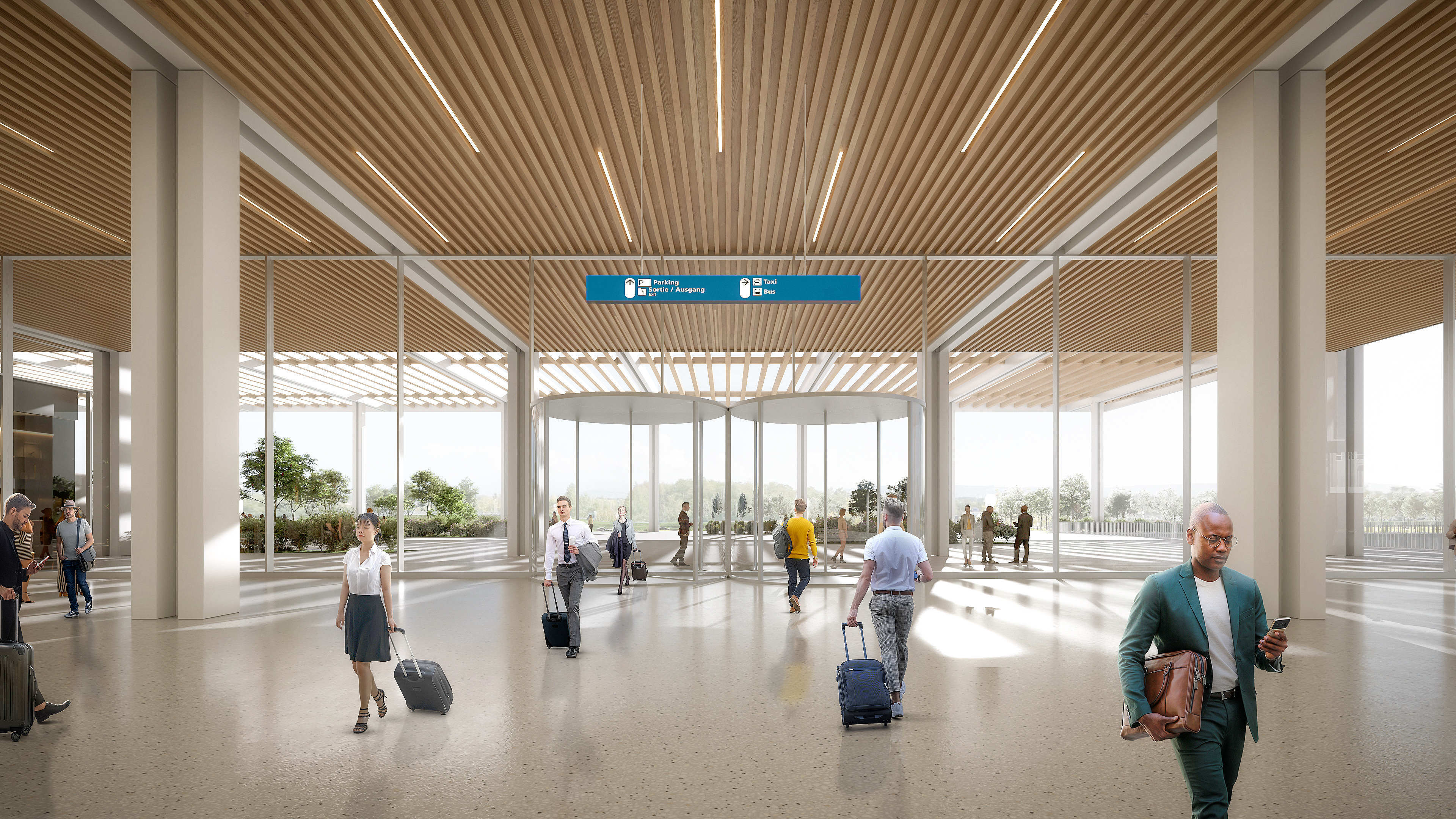
The generous height of the terminal, supported by tree-like columns, creates a grand arrival experience. Air, space and light are the guiding principles, ensuring a warm, open and welcoming atmosphere. The terminal structure is defined by a powerful, repetitive rhythm of subtle diagonal lines, referring to the more expressive structure of the existing terminal with its steel tree columns.
This creates harmony between old and new. With its elegant and timeless appearance, the new terminal is a valuable addition to the existing building, enhancing it without conflict.
AN AIRPORT AT A HUMAN SCALE
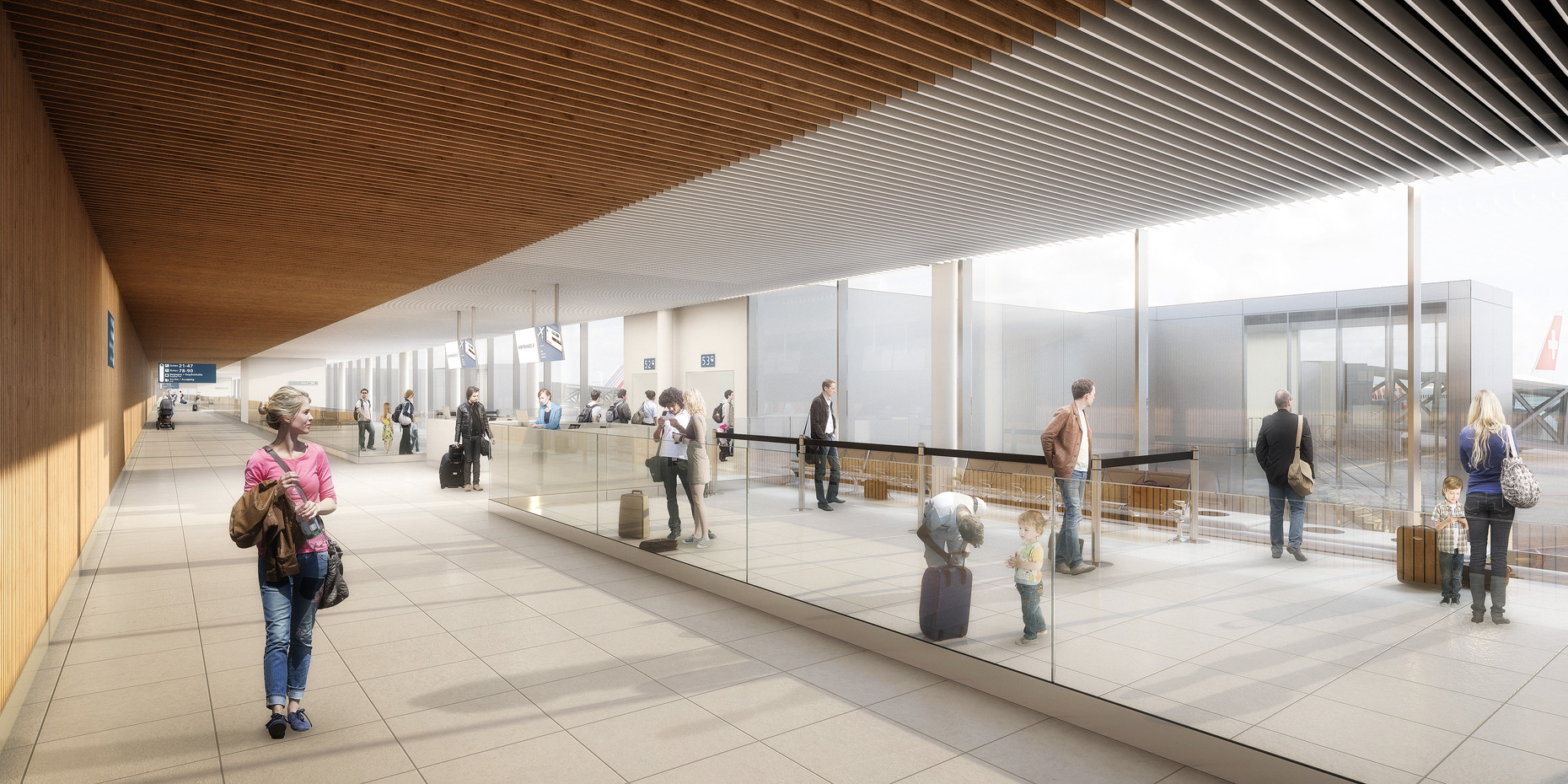
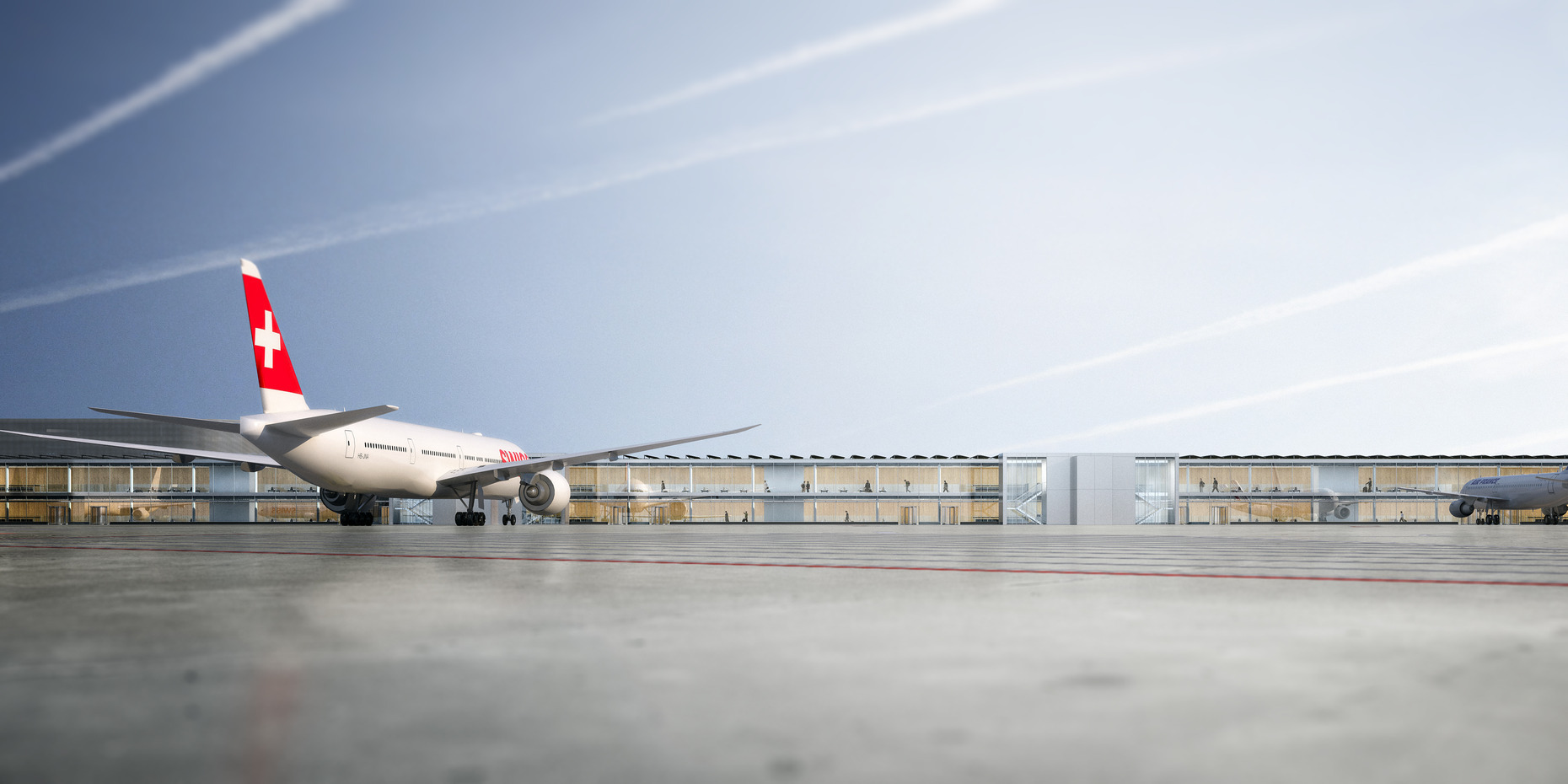
The heart of the airport lies at the centre of the terminal complex, at the intersection of the city-side multimodal hall and the Go-to-Gate area, which offers expansive views of the airside. Short walking distances and clear sightlines ensure a human scale throughout the terminal.
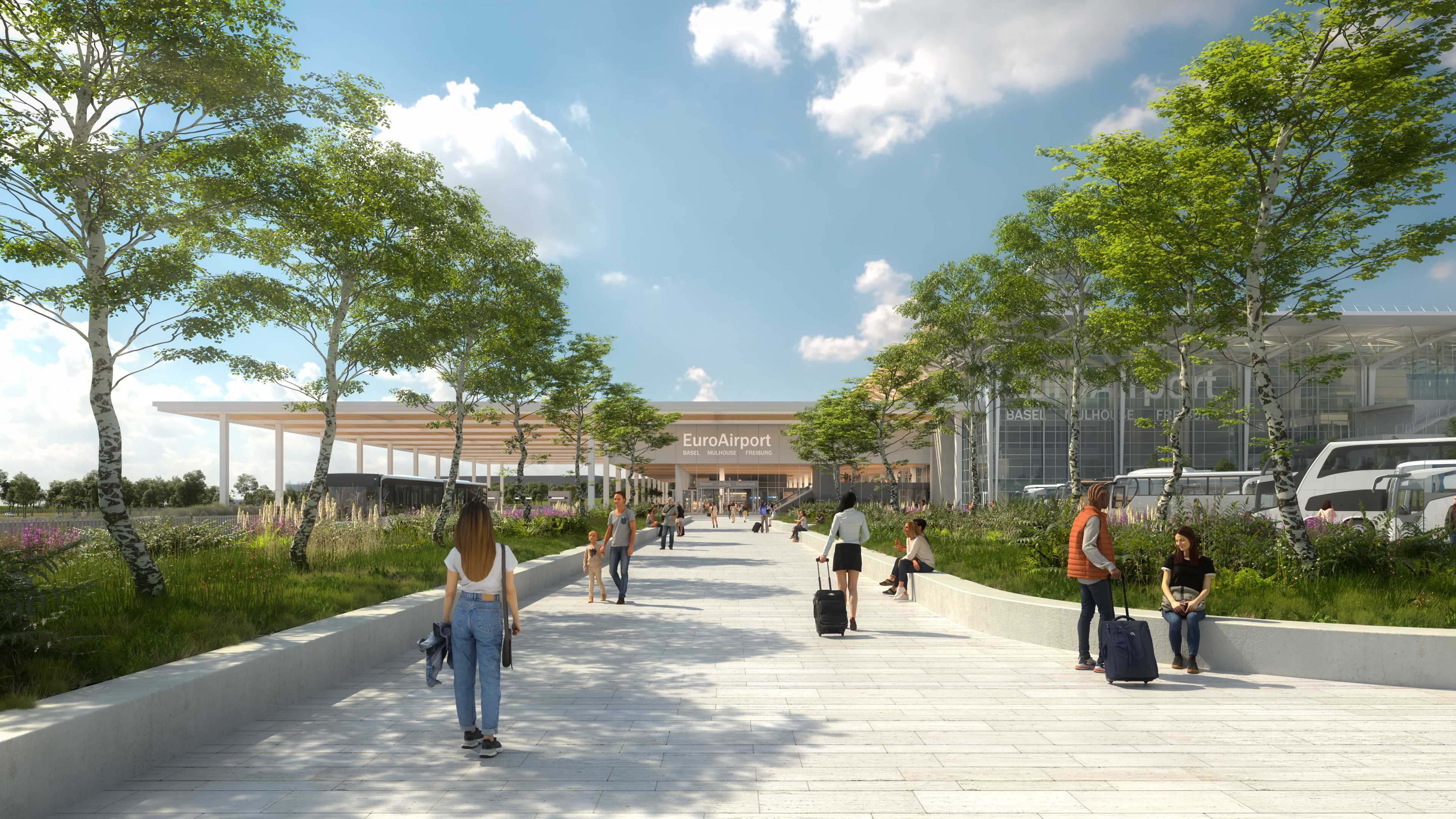
The combination of ground-level arrival and departure halls provides clarity, enables shared use of facilities and retail, and creates a single, unambiguous route that contributes to efficient use of space. From the outside, it is immediately clear that all routes lead to one central gathering point: a continuous forward movement.
Throughout the terminal and along all routes, travellers always know where they are and where they are going—the next step in the journey is already visible. Daylight supports natural wayfinding, while clear signage and intelligent digital technologies are deployed to make the journey as pleasant and efficient as possible.
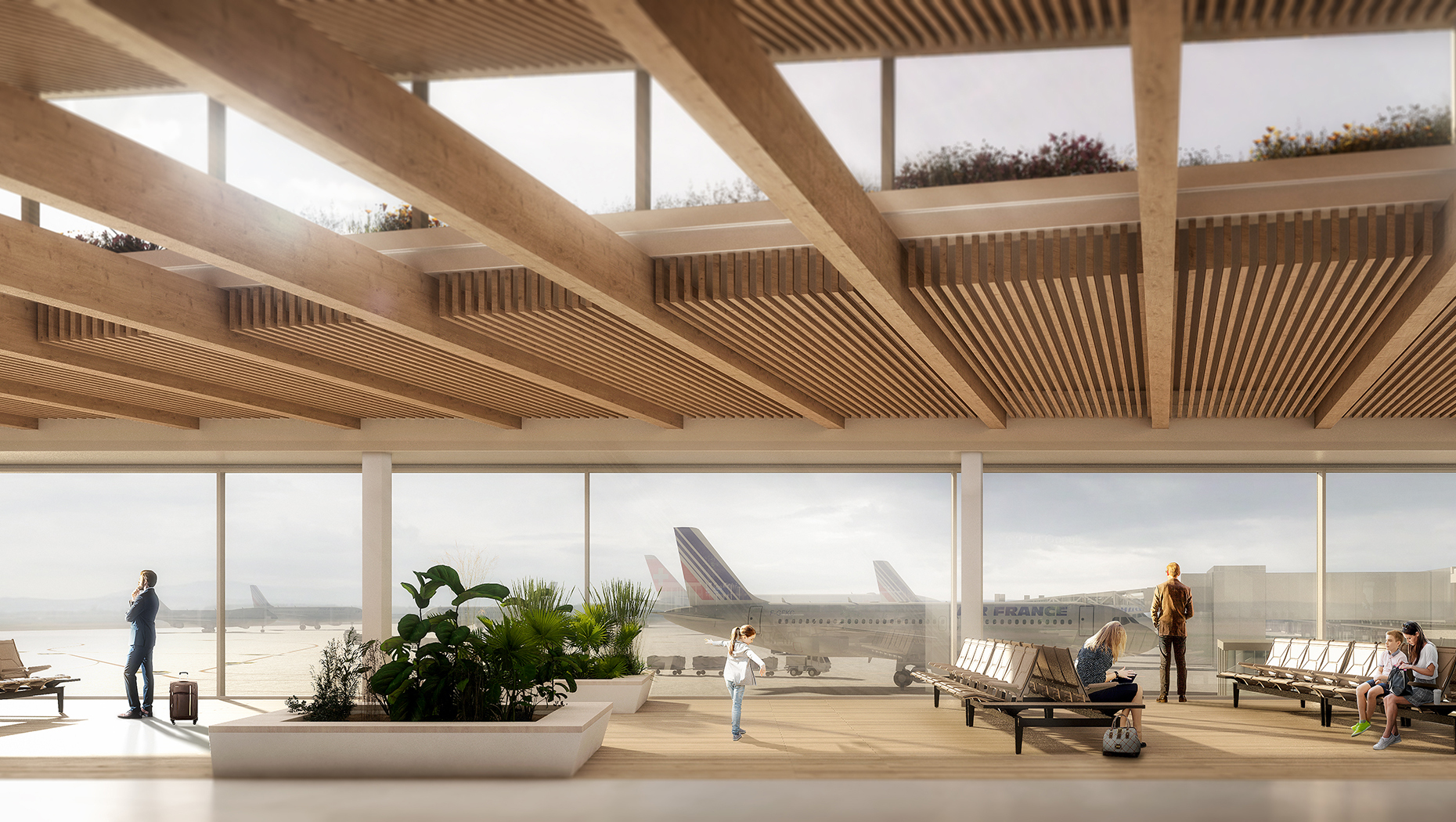
AN ALL-ENCOMPASSING ROOF
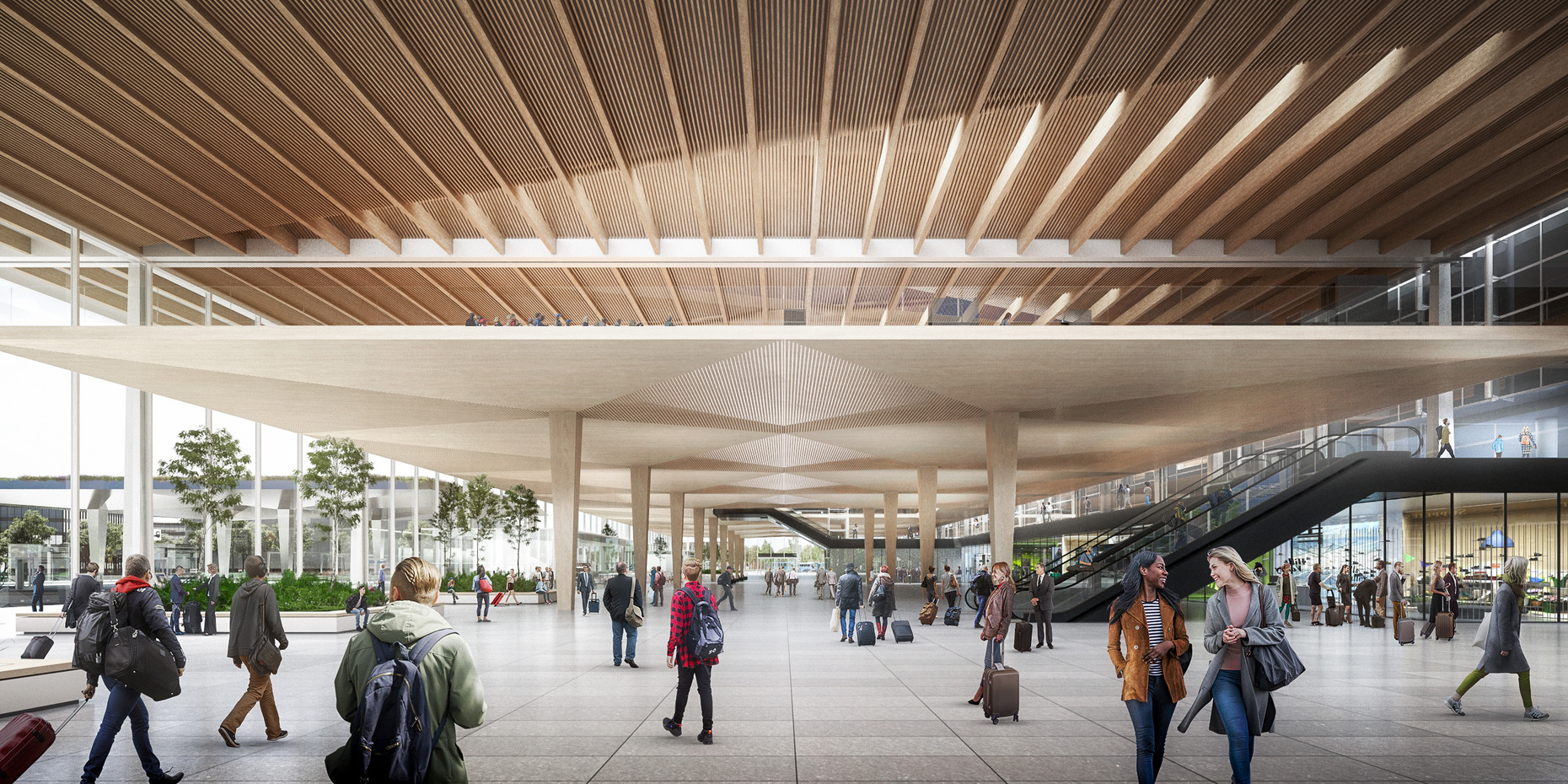
EuroAirport aspires to become one of the most sustainable airports in Europe, setting the standard for the challenges facing the aviation sector. The overarching, horizontal roof of the extension plays a key role in this ambition. It provides optimal functionality for the interior and contributes strongly to the identity of the exterior.
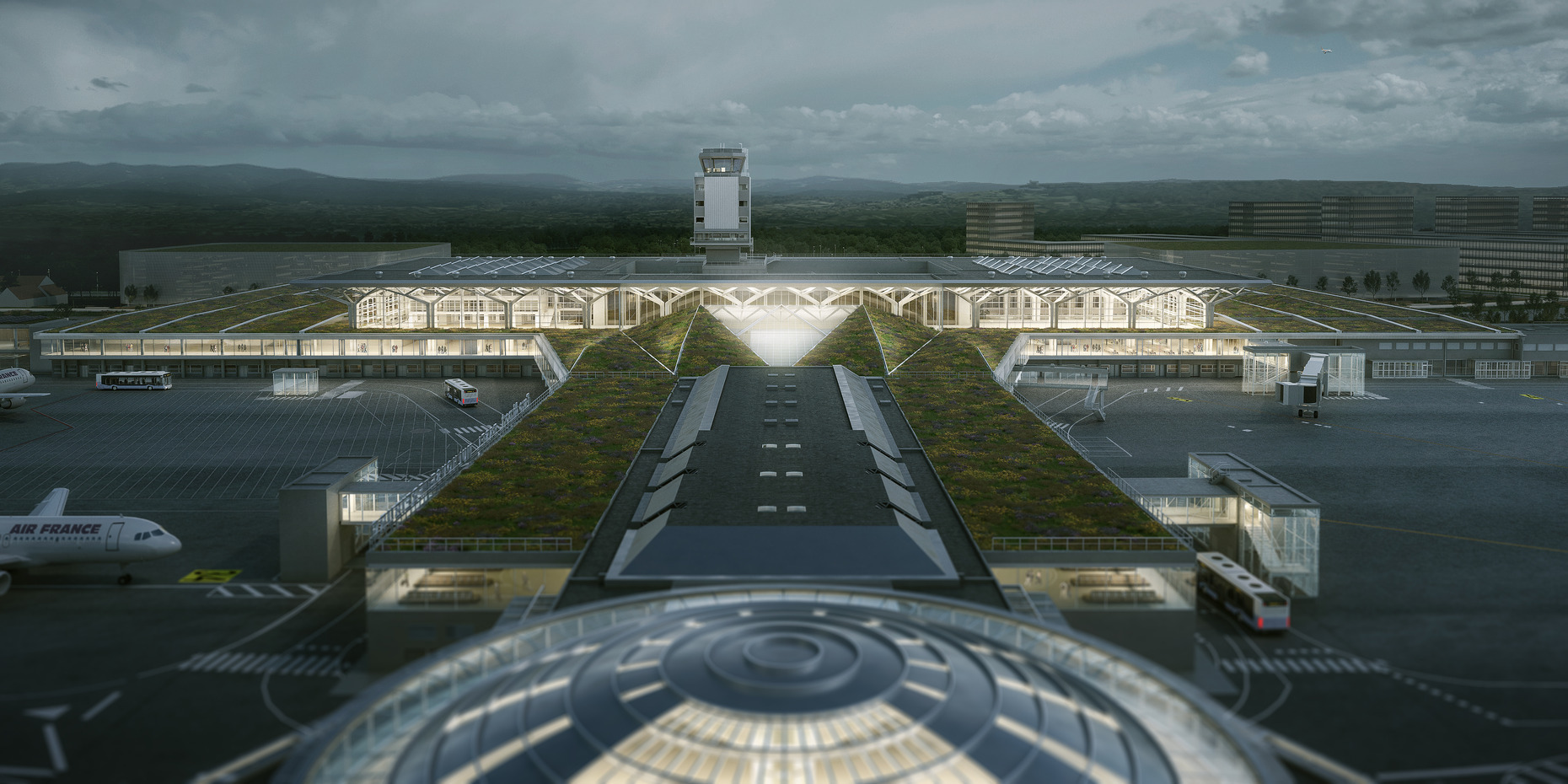
Potentially the largest green roof in France, the roof is constructed with a timber load-bearing structure. Through daylight and vegetation, it adds a friendly and warm atmosphere. The choice of wood as both structure and finish supports the development of clean construction materials that also store CO₂.
Tailored to orientation, the roof is planted with vegetation that enhances biodiversity, purifies the air and captures rainwater. PV panels on the pier and parking structure supply the airport with renewable energy.

—