Brussels Airport
In order to accommodate growing numbers of passengers, Brussels Airport expands with an intermodal hub, an extension of the departures and arrivals hall, a new hotel and office building, and a green public boulevard.
SMOOTH PASSENGER EXPERIENCE
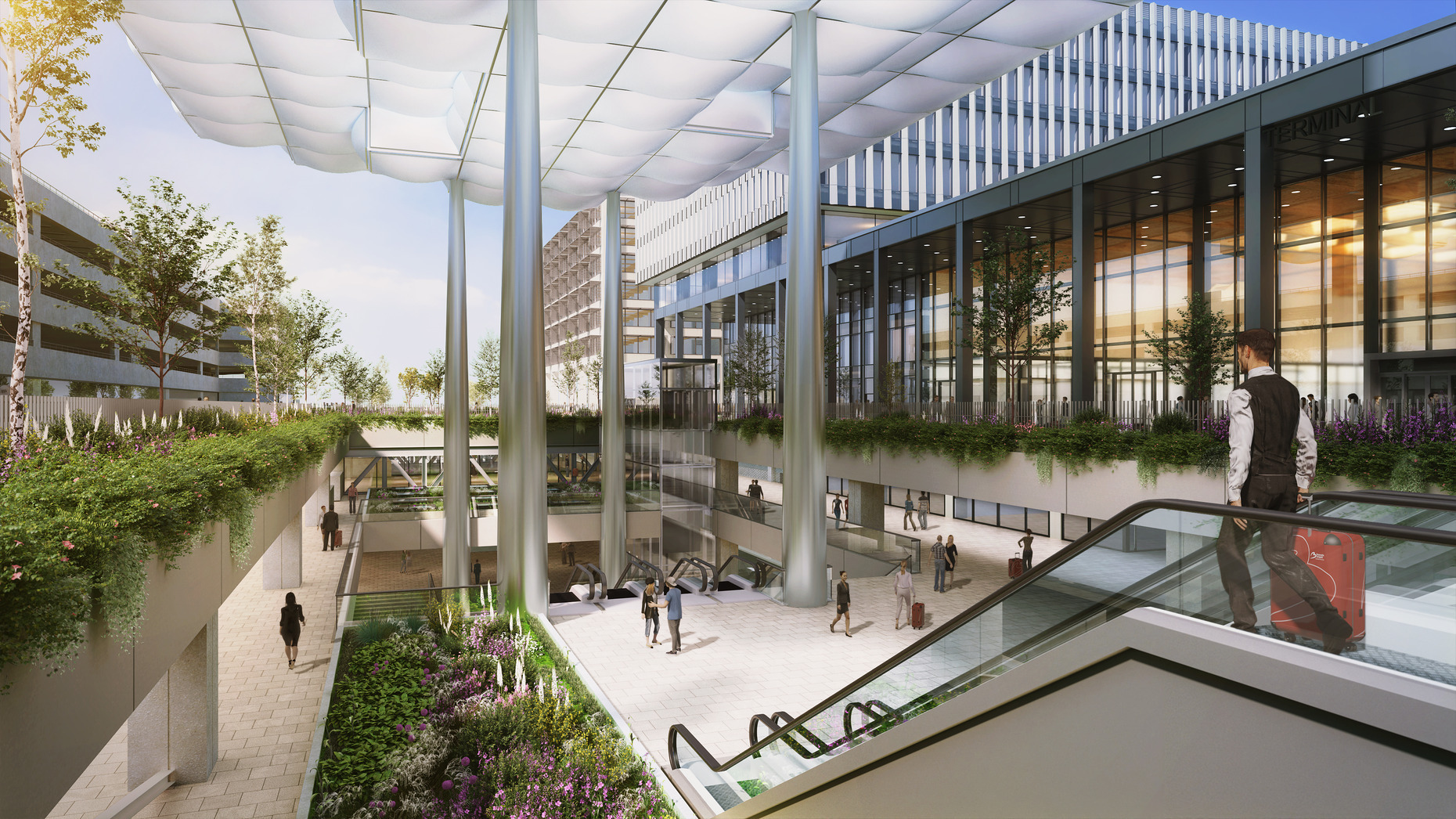
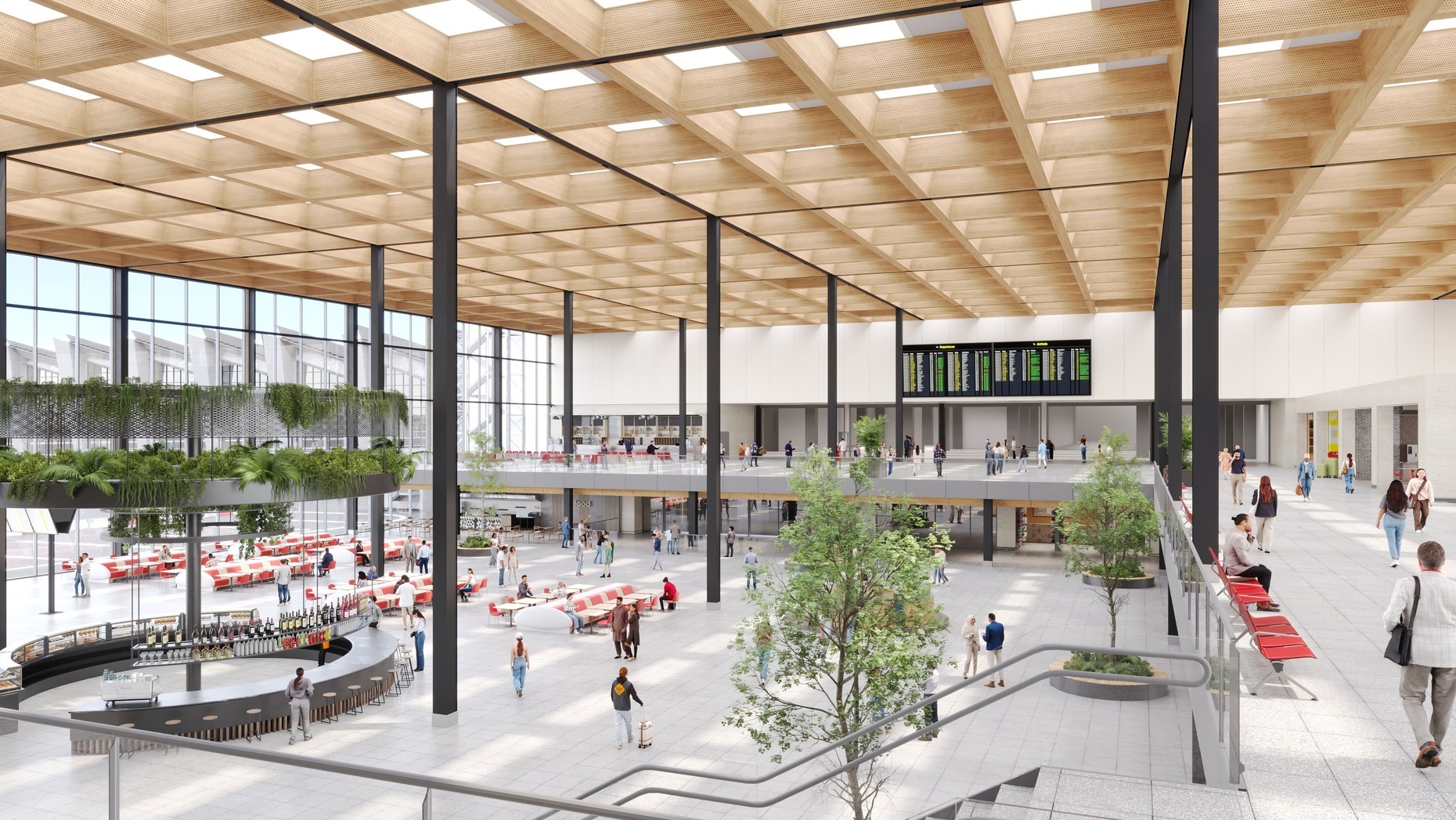
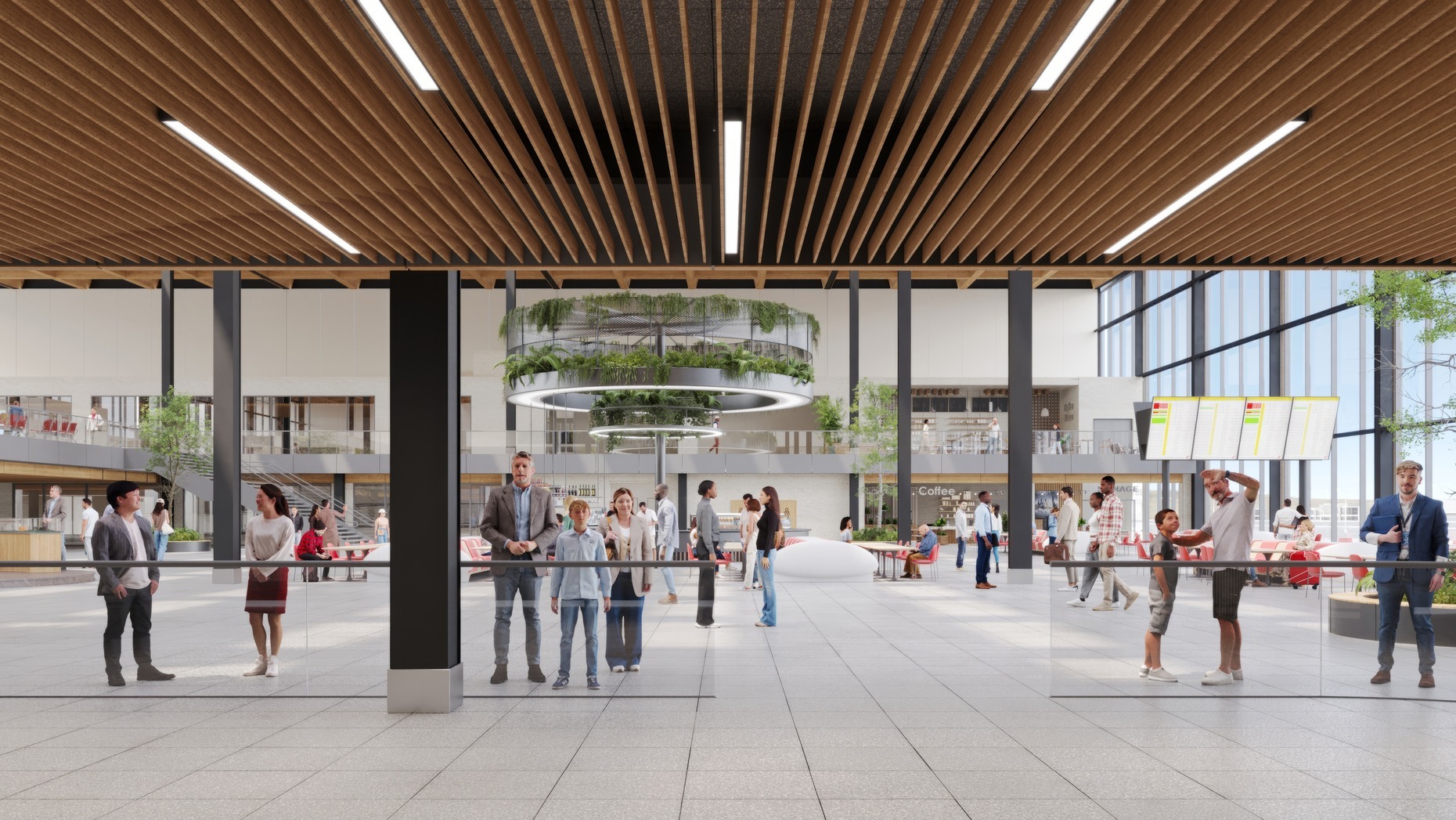
Passenger experience is at the heart of the design. The new expanded terminal accommodates a lively, attractive space with a multitude of functions through which arriving and departing passengers can move efficiently and intuitively. The hall is spacious, and, with its fully glazed façade, offers spectacular views of the tarmac. Daylight will enter through the roof, which also features a large solar panel array and green roofing.
THE INTERMODAL HUB CONNECTING PUBLIC SPACE
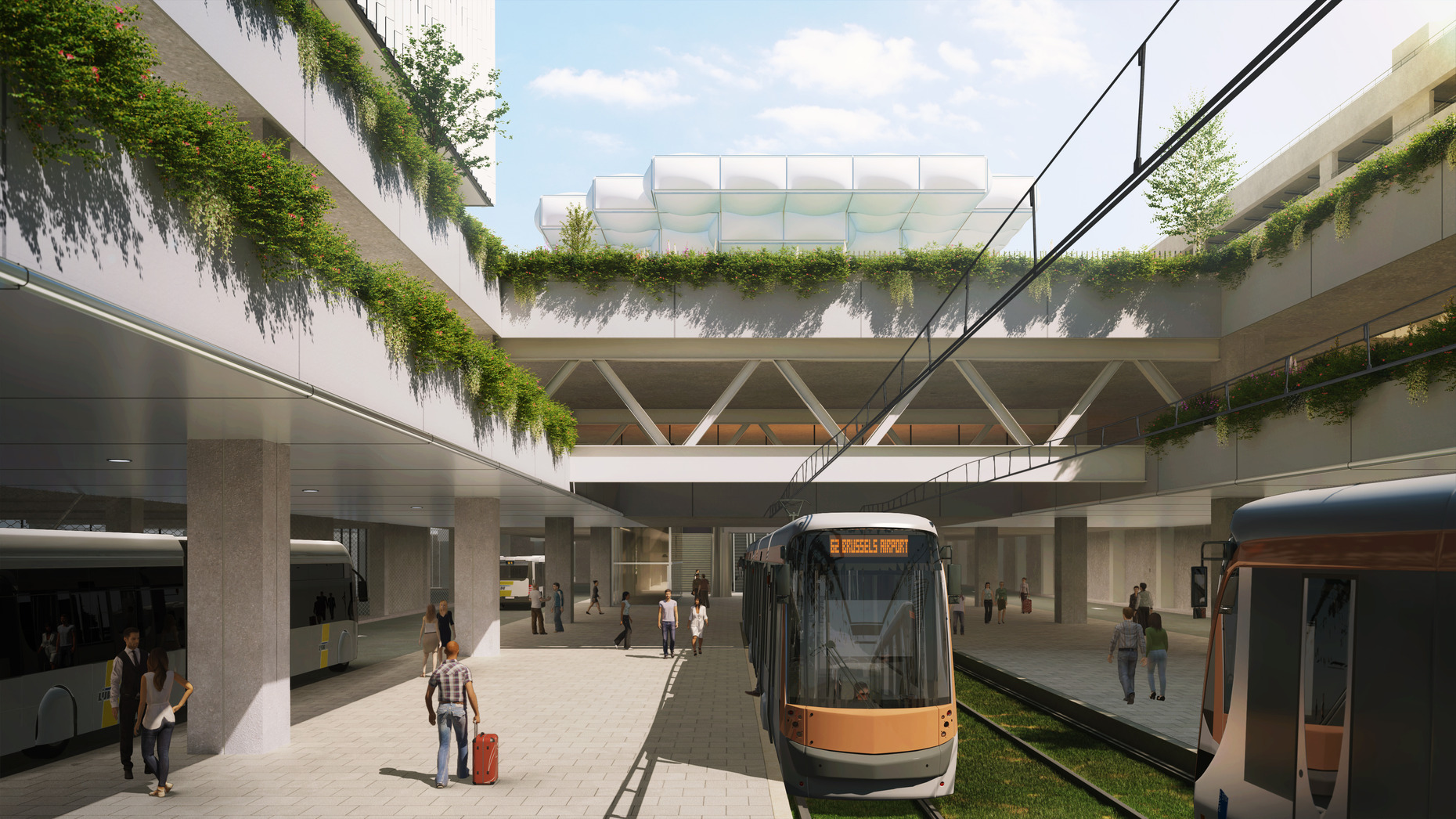
At the heart of the expansion plan lies the intermodal hub — a vibrant core of the airport where all transport modes are vertically stacked. This central node connects the train station, a redesigned bus terminal, a spacious bicycle parking area, and an improved taxi zone. The future airport tram will also terminate here. Thanks to a massive atrium with large openings, daylight penetrates to all levels through large openings — even to the deepest layer, the underground train station.
CONNECTING PUBLIC SPACE
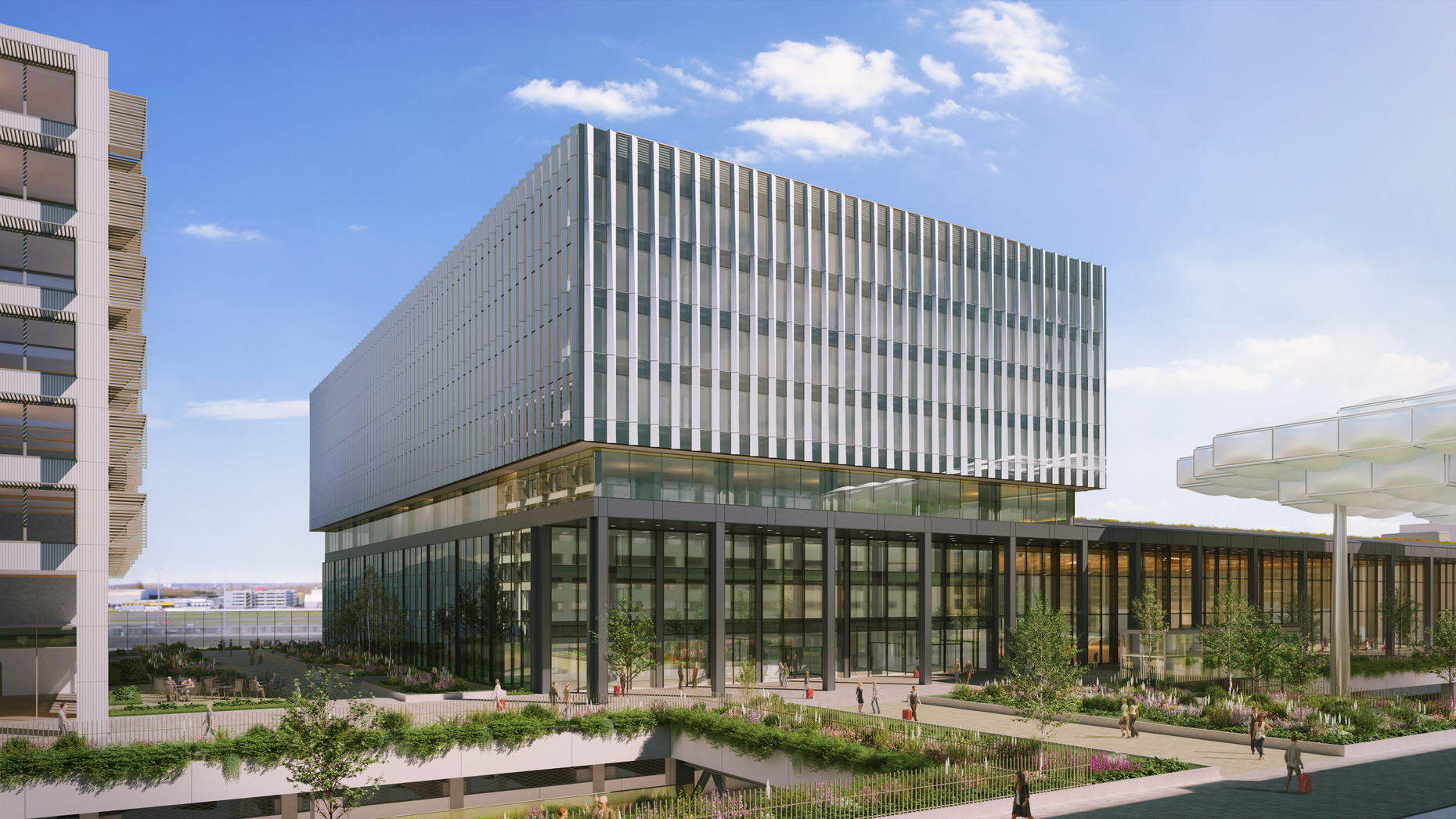
A large public green boulevard covers the intermodal hub and offers a vibrant public space in front of the expanded terminal, the parking garages, the new hotel and office spaces. This public space guides travelers in a clear and intuitive way to all buildings and the possibility to smoothly transfer between the various forms of transport, without the need to cross any roads. The public space, moreover, offers a lively green outdoor space, where travelers and visitors can sit, relax and enjoy the vibrancy of the airport.
The design for the new intermodal hub, terminal extension, and hotel at Brussels Airport is rational, clear, and intuitive. It combines a high-quality user experience with a highly efficient and modular building structure.
A NEW HOTEL AND OFFICE BUILDING
A new 4-star hotel with over 300 rooms will be built adjacent to the terminal, accompanied by a new office building. Both buildings offer liveliness to the airport, with their facilities for eating and drinking, staying and working.
COMMITMENT TO SUSTAINABILITY
The new buildings aim to meet sustainability certifications such as BREEAM (Outstanding), WELL (Platinum), and DGNB (Gold), in line with Brussels Airport’s sustainability strategy. The design team is focusing on flexible buildings with modular layouts, wooden structures where possible, sustainable material choices, circular principles, reduced energy demand, and the integration of future-proof technologies such as water infiltration systems, thermal energy storage, heat pumps, and solar panels.