House of Culture and Administration
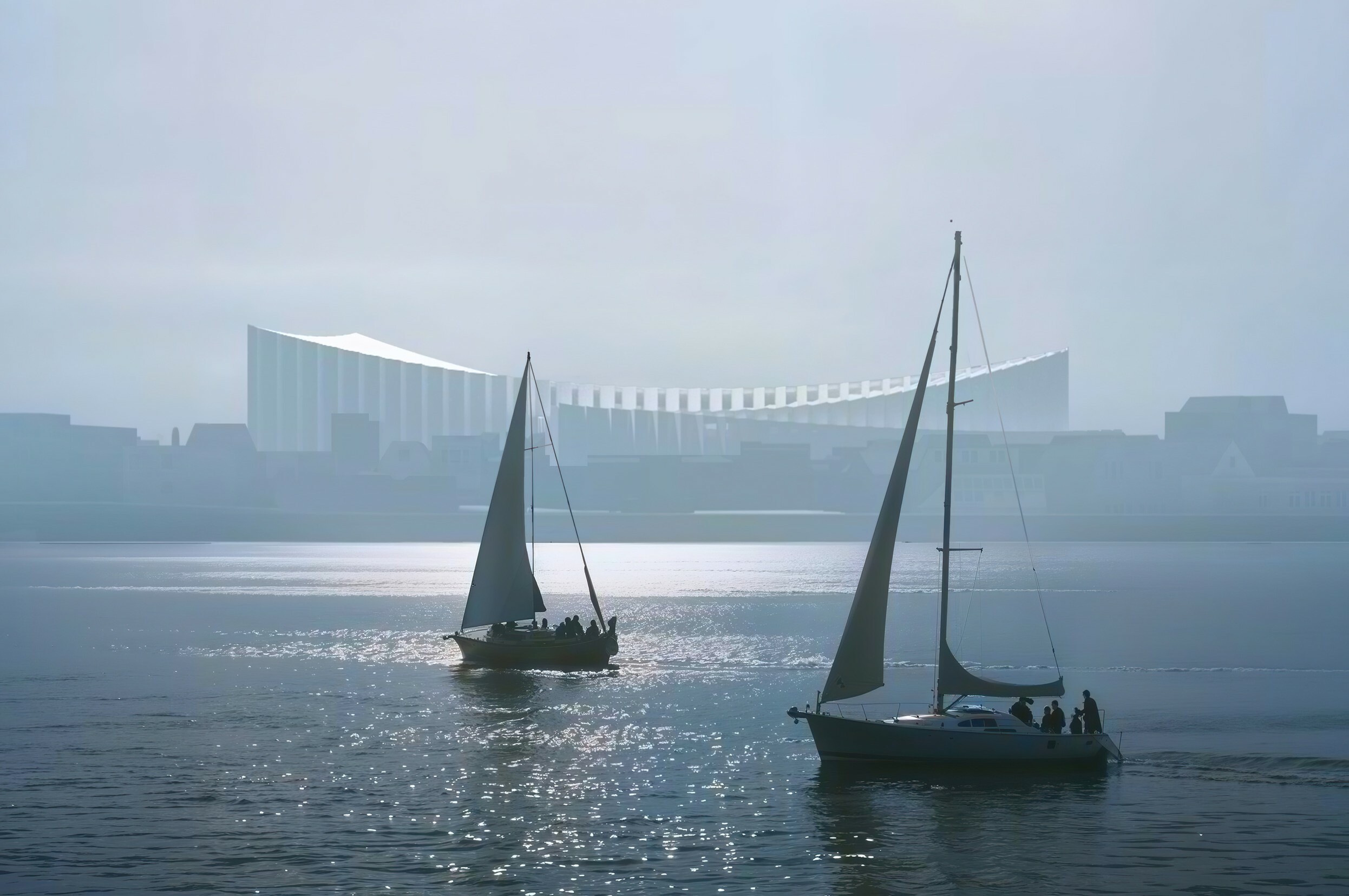
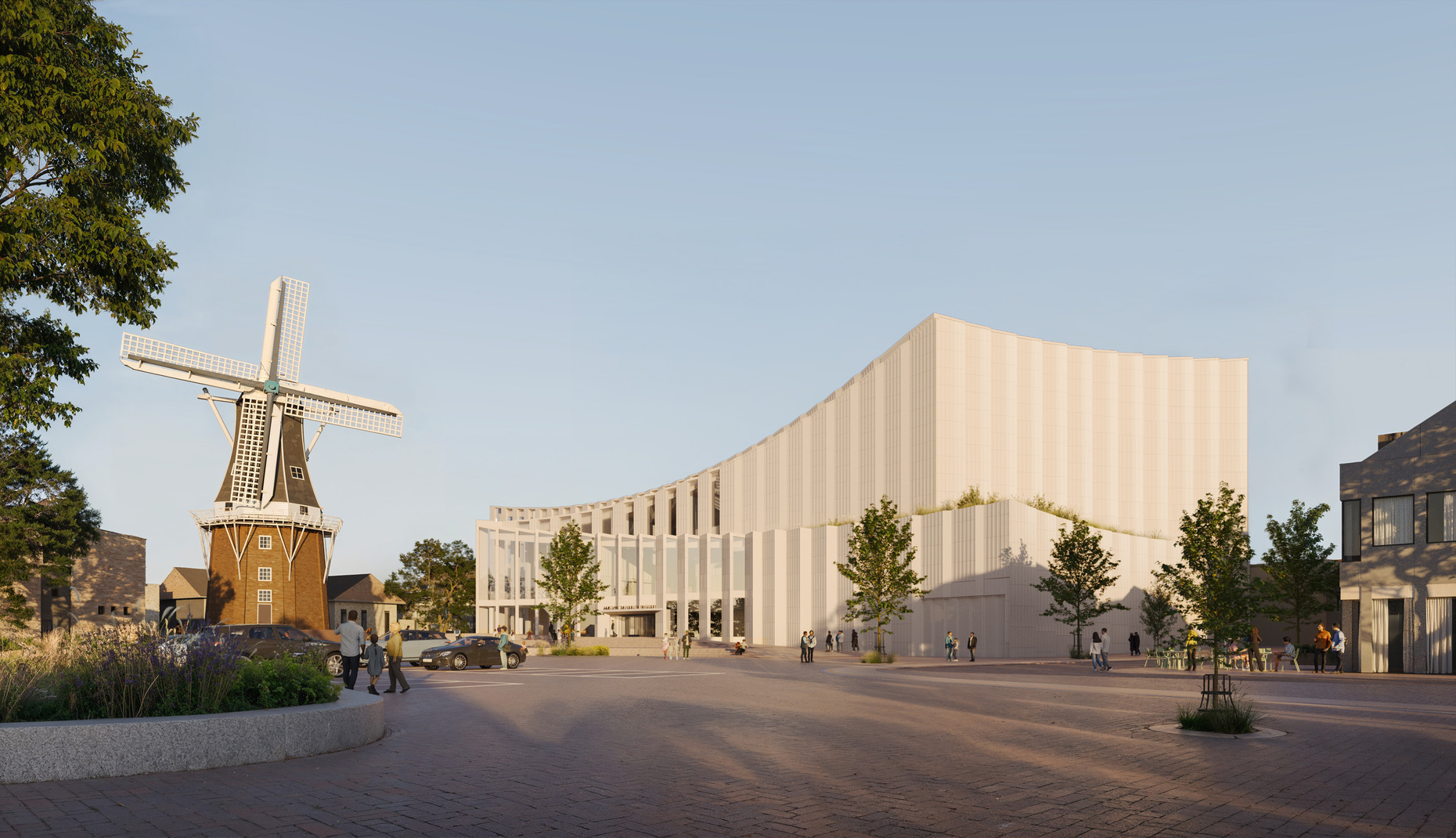
Located in the north of the Netherlands, in Delfzijl, a new civic landmark is taking shape. More than just a building, it reflects the character of the Eemsdelta region itself, shaped by dialogue with residents and cultural partners. Benthem Crouwel Architects, in collaboration with Snøhetta, are creating a destination at Molenbergplein that brings together theatre spaces, a library, and municipal functions under one undulating roof.
UNITING DIFFERENT FUNCTIONS
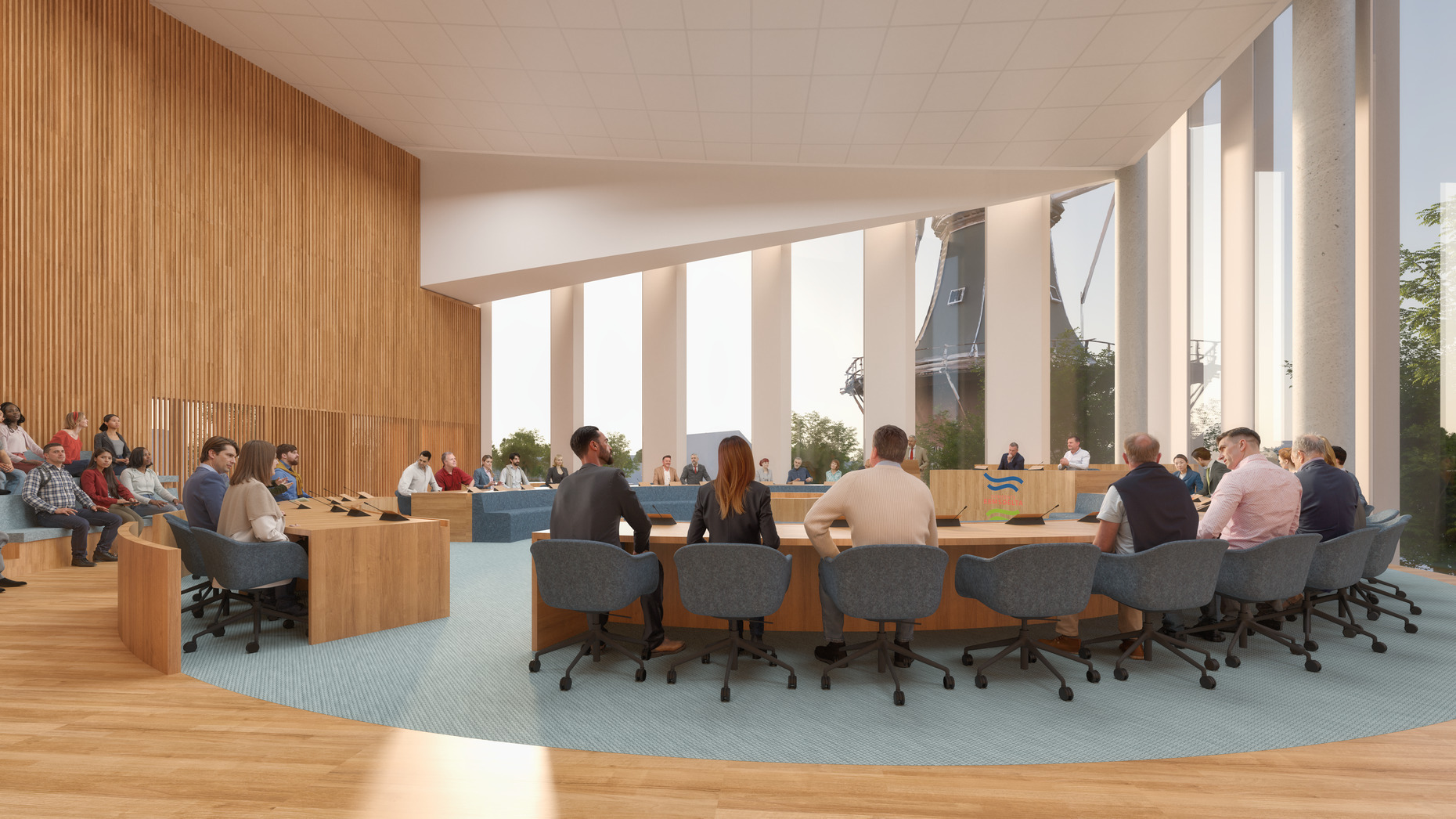
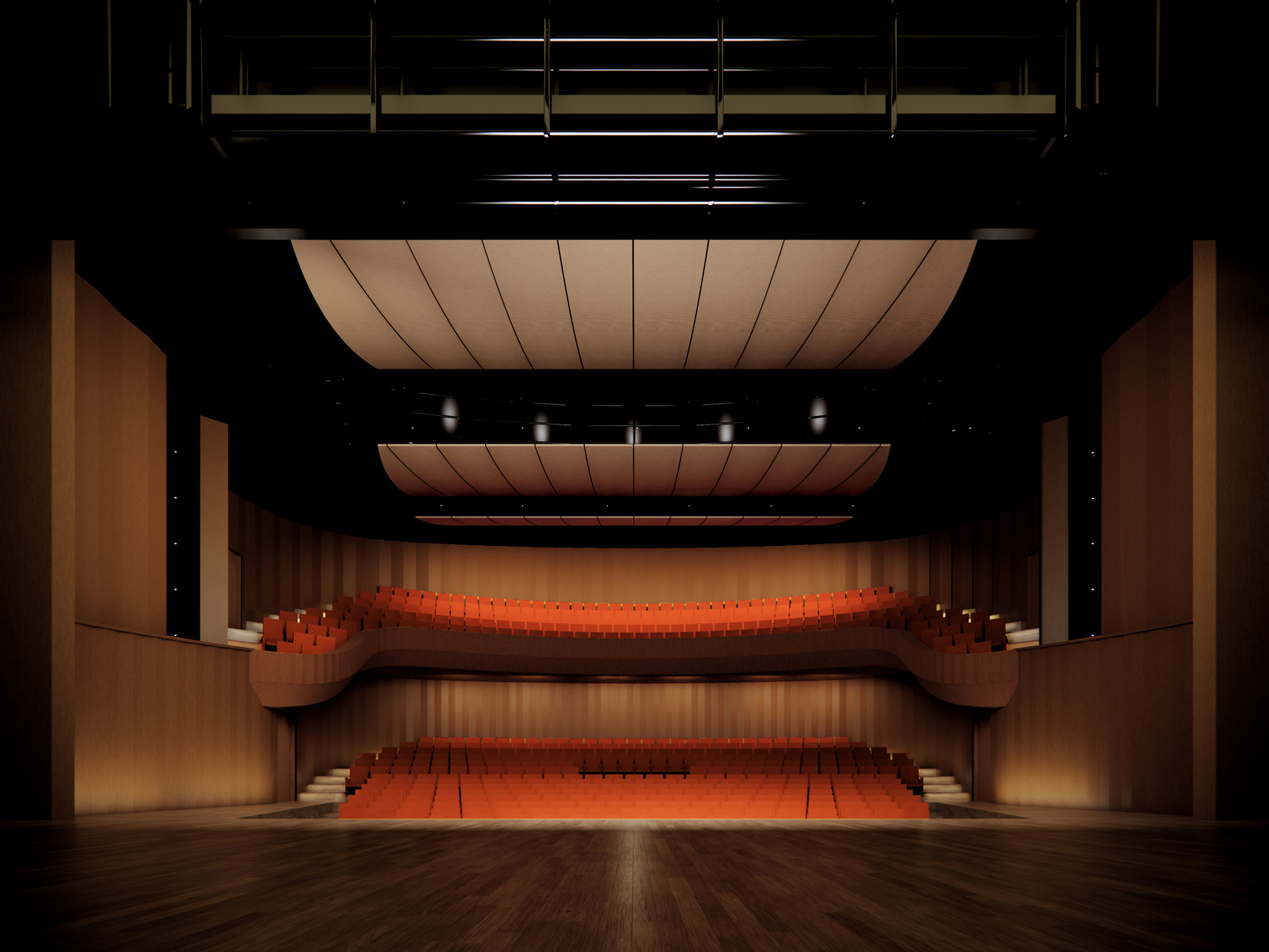
The House of Culture and Administration unites three main functions – a theatre, library and city hall – in a building that is open, flexible, and inviting. Instead of isolated spaces, the building is designed as a single, coherent environment where different functions seamlessly overlap. In this way, the building functions both as a destination and a meeting place, while also serving as a passage through the city.
THE LIBRARY AS THE CENTRAL HEART
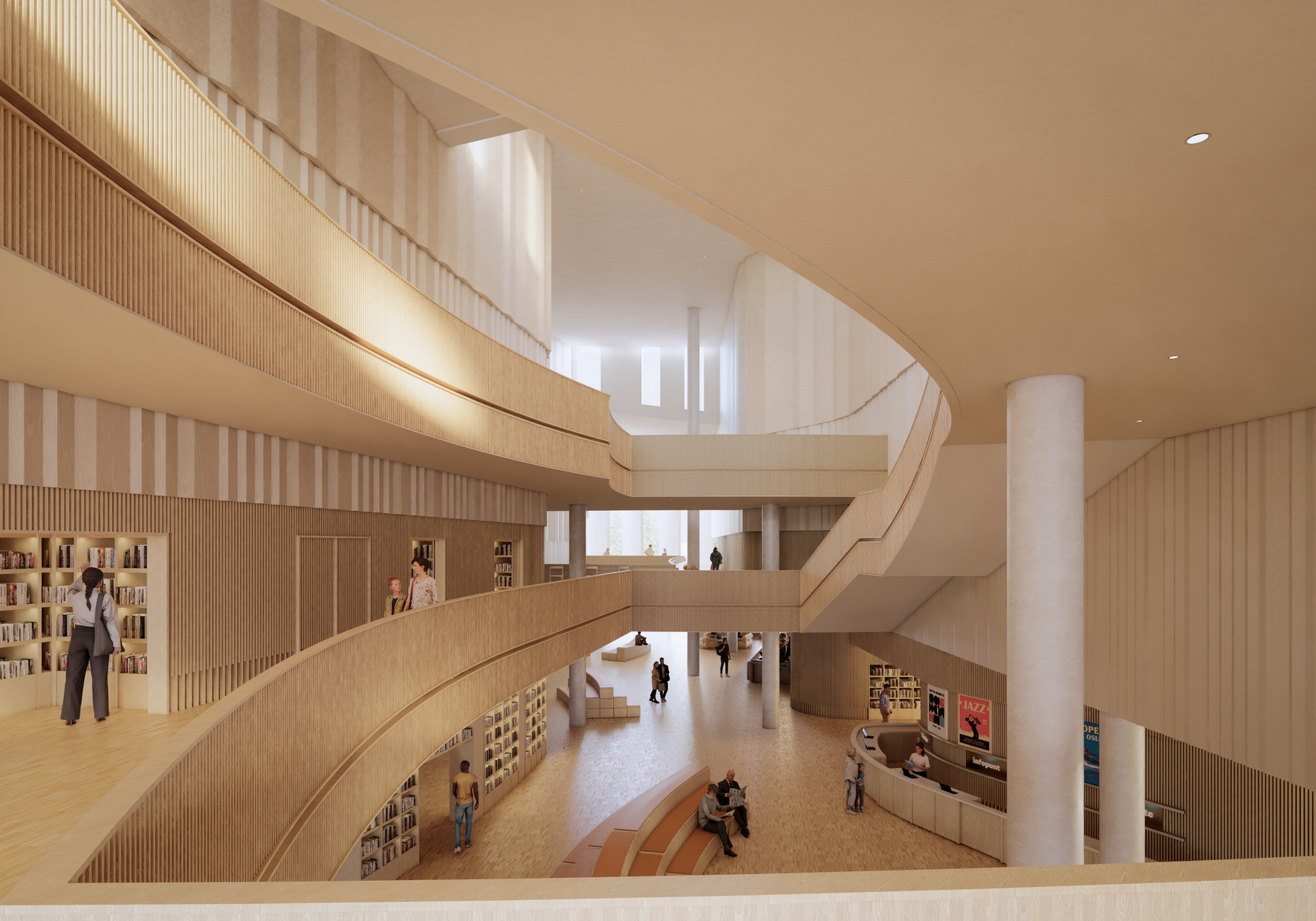
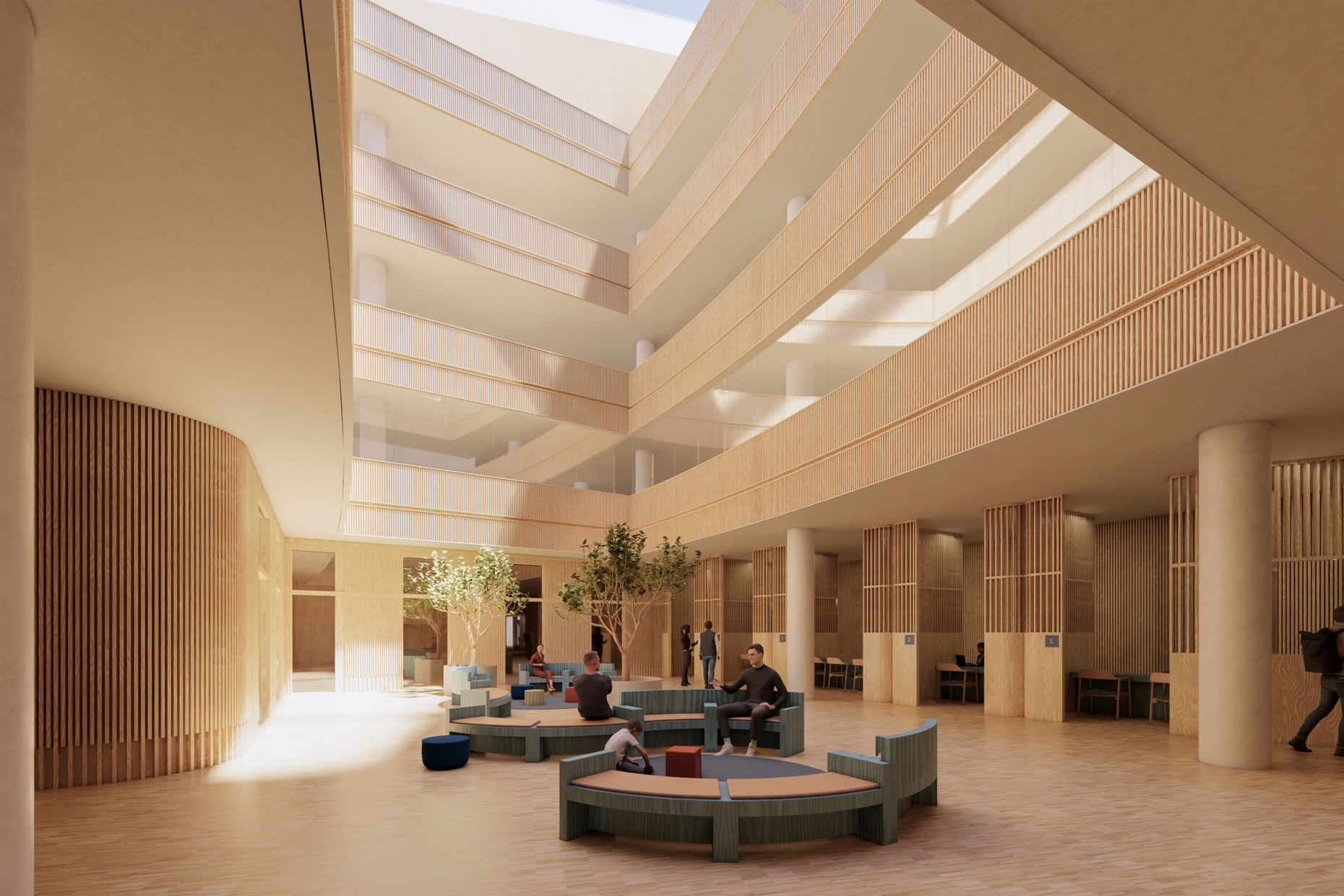
Positioned at the center of the building, the library serves as both a civic corridor and a communal hub. It connects the building’s different functions while fostering interaction, encouraging reading, gathering, working, and spontaneous encounters. More than just a library, it forms the building’s social and cultural core, linking people to each other and to the community while carrying the identity of the House of Culture and Administration.
LIKE A SHIP
The central heart is inspired by the logic of a ship, expressed through the tactile contrast of the hull and the sails. A robust wooden hull provides grounded intimacy; while soaring sails emphasize the volume's verticality. Combined, they create an intuitive structure that anchors the interior and seamlessly integrates the region’s maritime identity.
A building that moves with its surroundings, like a sailing ship – elegant yet robust, protective, built to withstand the test of time. Its roofline scales from human-scale intimacy to spacious heights; a landmark crafted for Eemsdelta, Delfzijl and generations to make their own.

A FAÇADE THAT WELCOMES
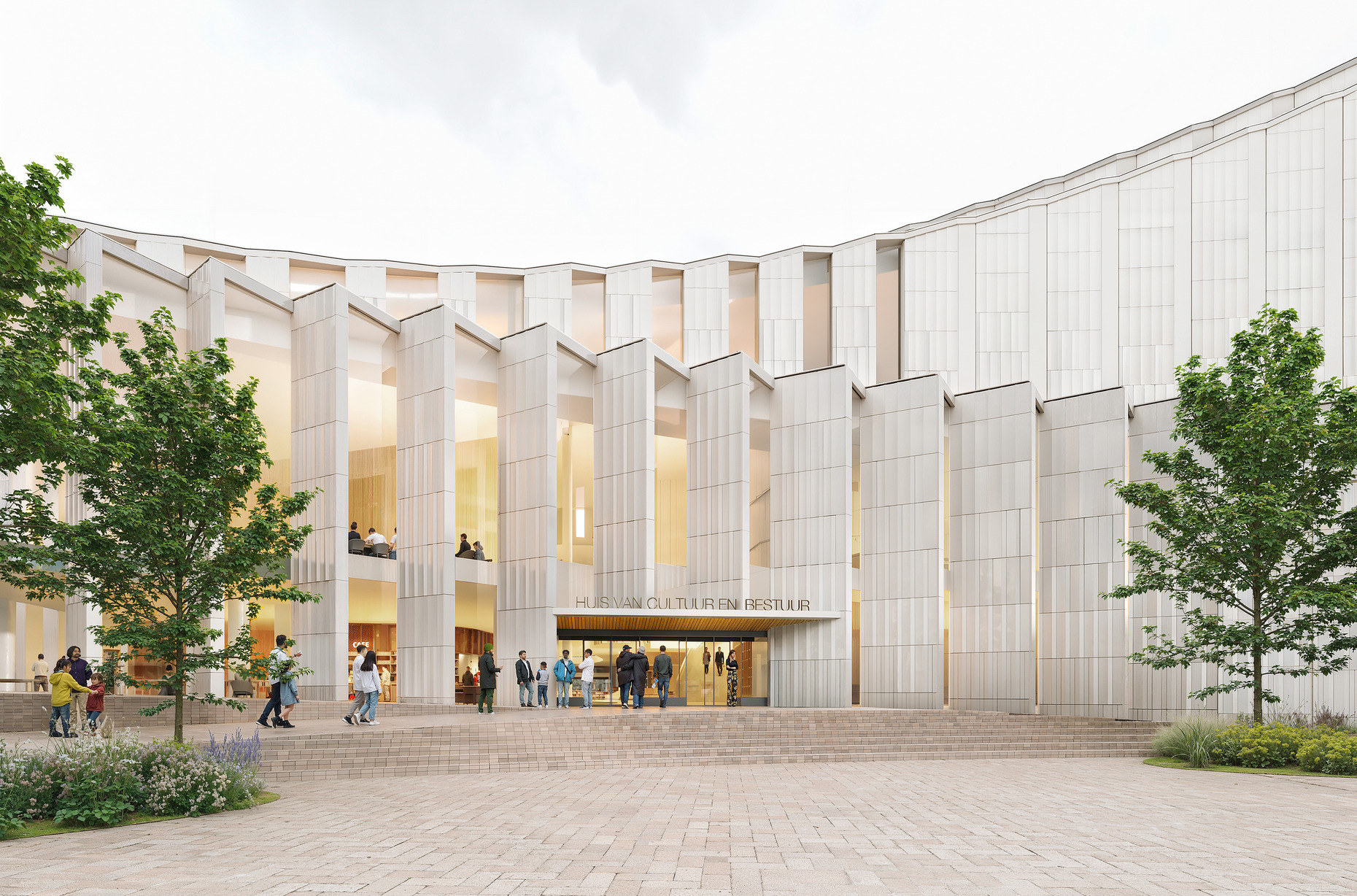
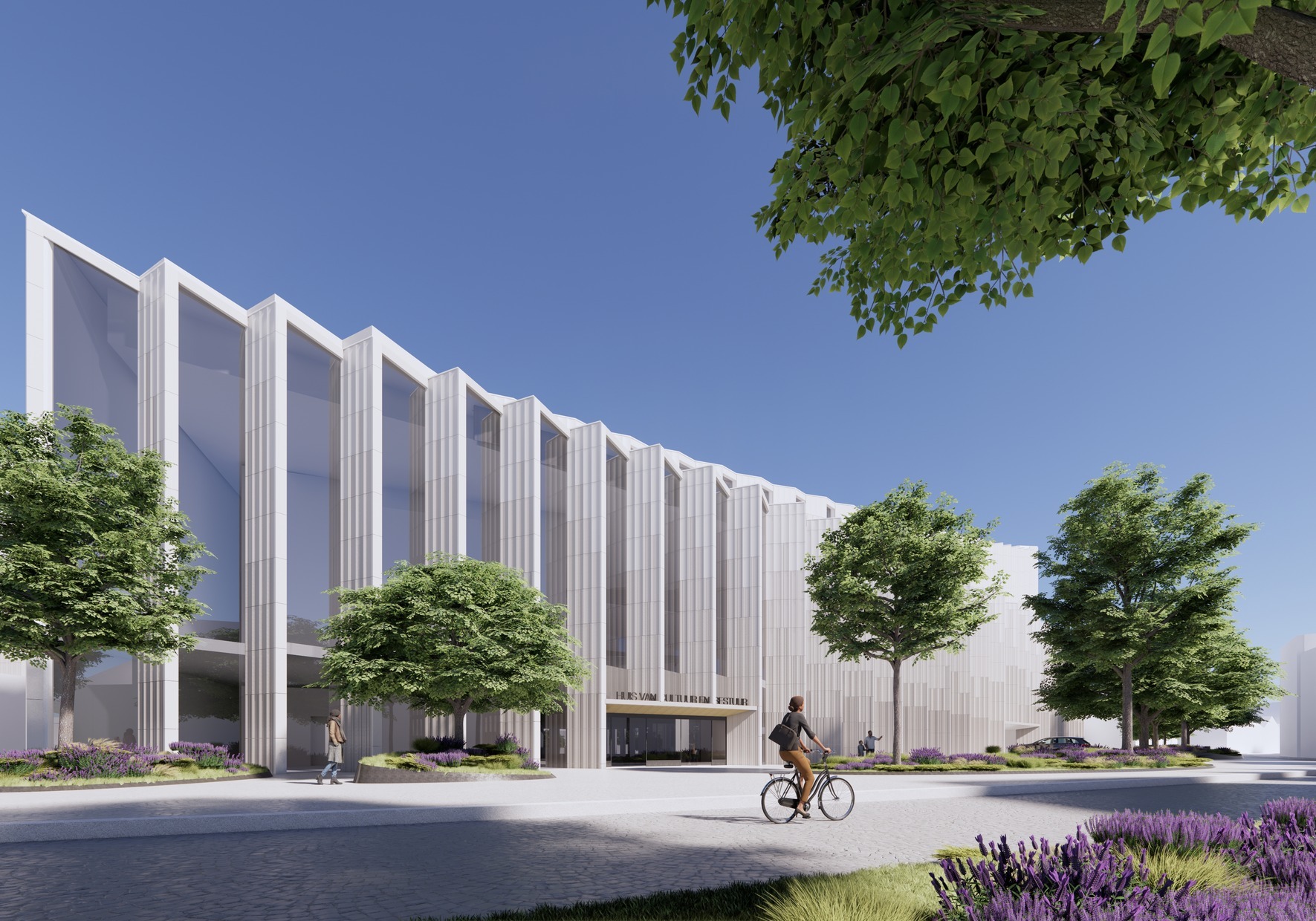
The building opens itself to the city through an inviting, sculptural façade. From a distance, it reads as a unified, flowing form; up close, it reveals layers that guide the public into open spaces while preserving privacy where needed. Transparency varies across the façade, creating a subtle gradient that reflects the functions behind it: more open where public activity takes place, more enclosed in private zones.
ROOTED IN PLACE
The design responds to Delfzijl’s unique context, bridging the square between the harbor and city center. It forms a natural link within its surroundings, enhancing public space and reinforcing sightlines to local landmarks such as the mill and central church. In doing so, the building creates a coherent urban composition where past and present meet. Beyond the structure itself, the area around Molenbergplein and Damsterkade will be revitalized, making the project an investment in both the city’s present and its future.
—