One-XS - Amsterdam Airport Schiphol
To improve passenger experience and make travel more comfortable, the One-XS project aimed to expand the terminals and re-design the passenger flow through security and customs. The main feature of the project was to implement a centralized security system, relocating all security checkpoints to the centrally located departure halls and replacing the former gate-level security controls.
SECURITY FILTER DEPARTURE HALL 2 AND 3
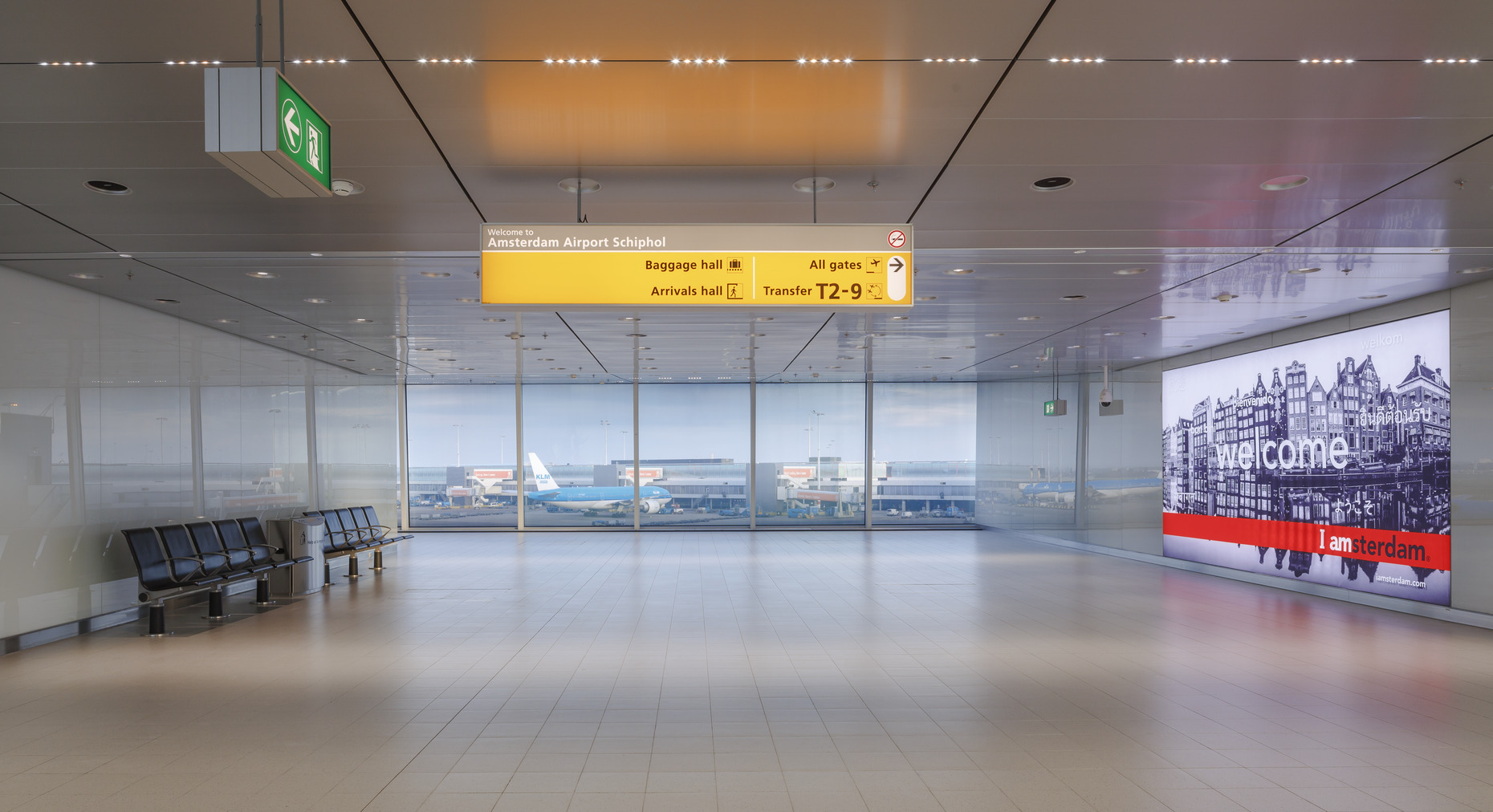
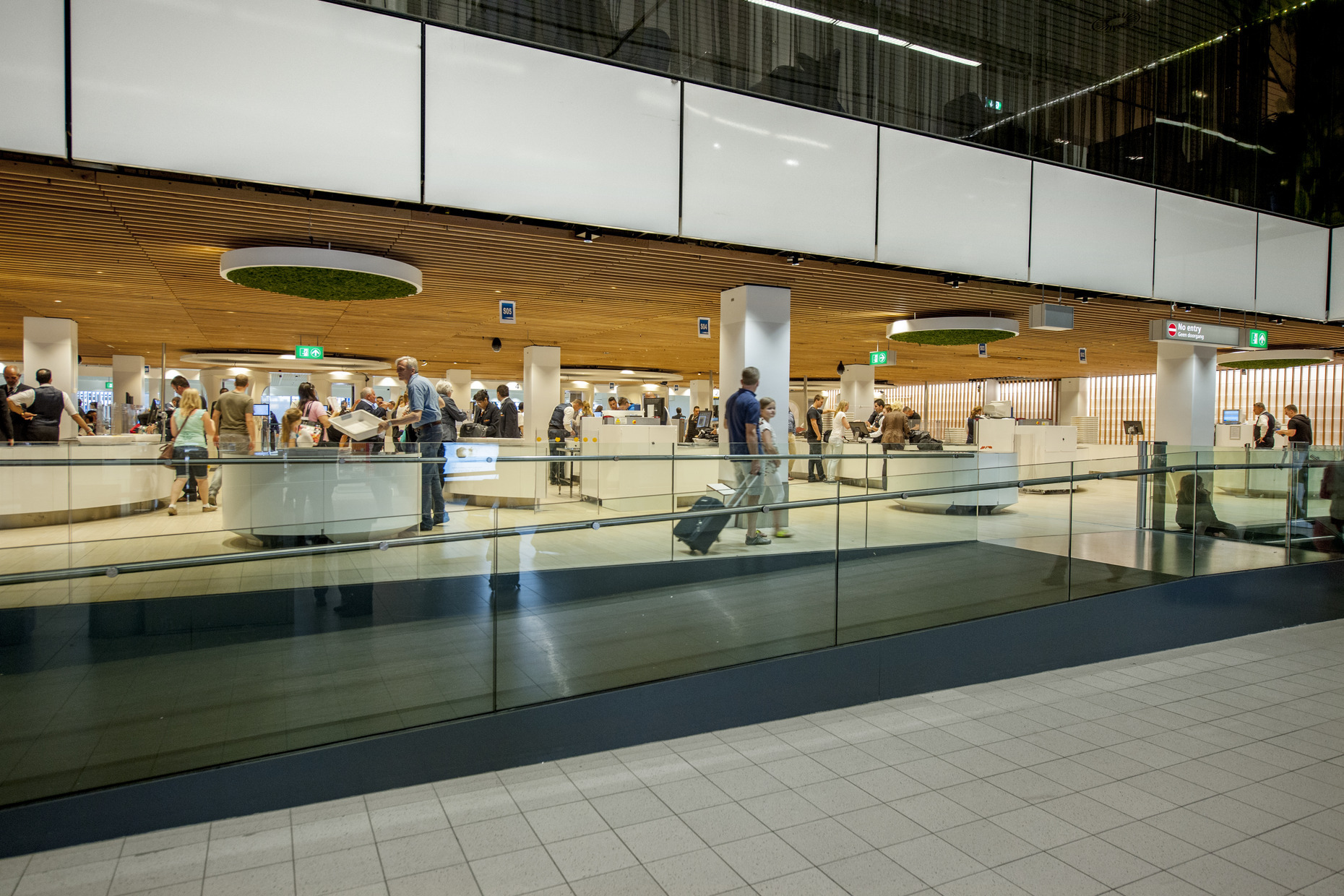
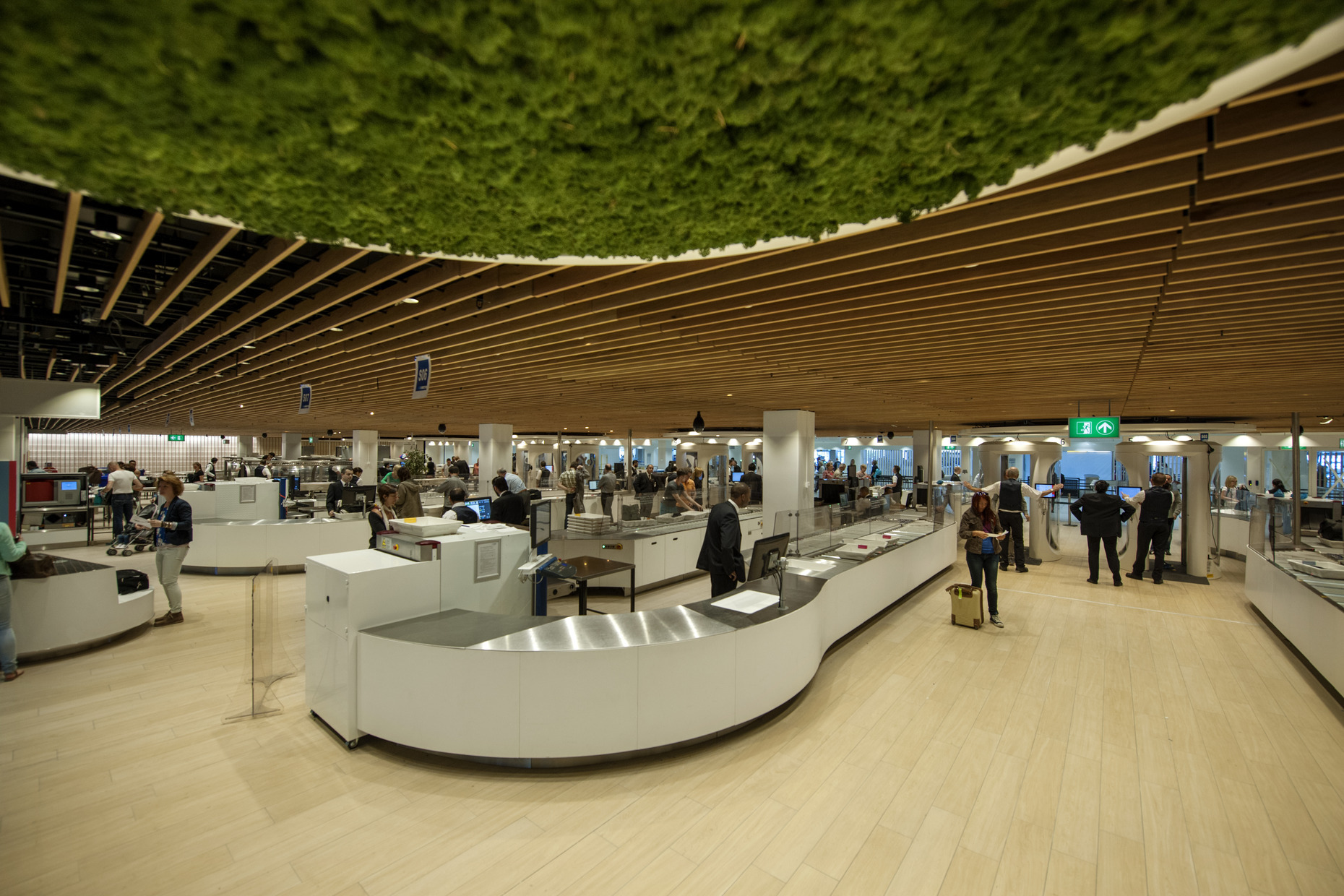
The new security service concept is designed to accommodate an efficient process, while putting passengers at ease. Departure Halls 2 and 3 follow similar layouts. Given the limited space within these departure halls, new mezzanine floors were constructed above the check-in desks to house the central security filters. A transparent entrance façade, equipped with boarding pass readers, separates the waiting area from the security lanes, providing a clear view of the security process. Behind this entrance façade lies the security screening area with the security lanes, featuring wooden ceiling and wall lamellae, as well as wooden floor tiles.
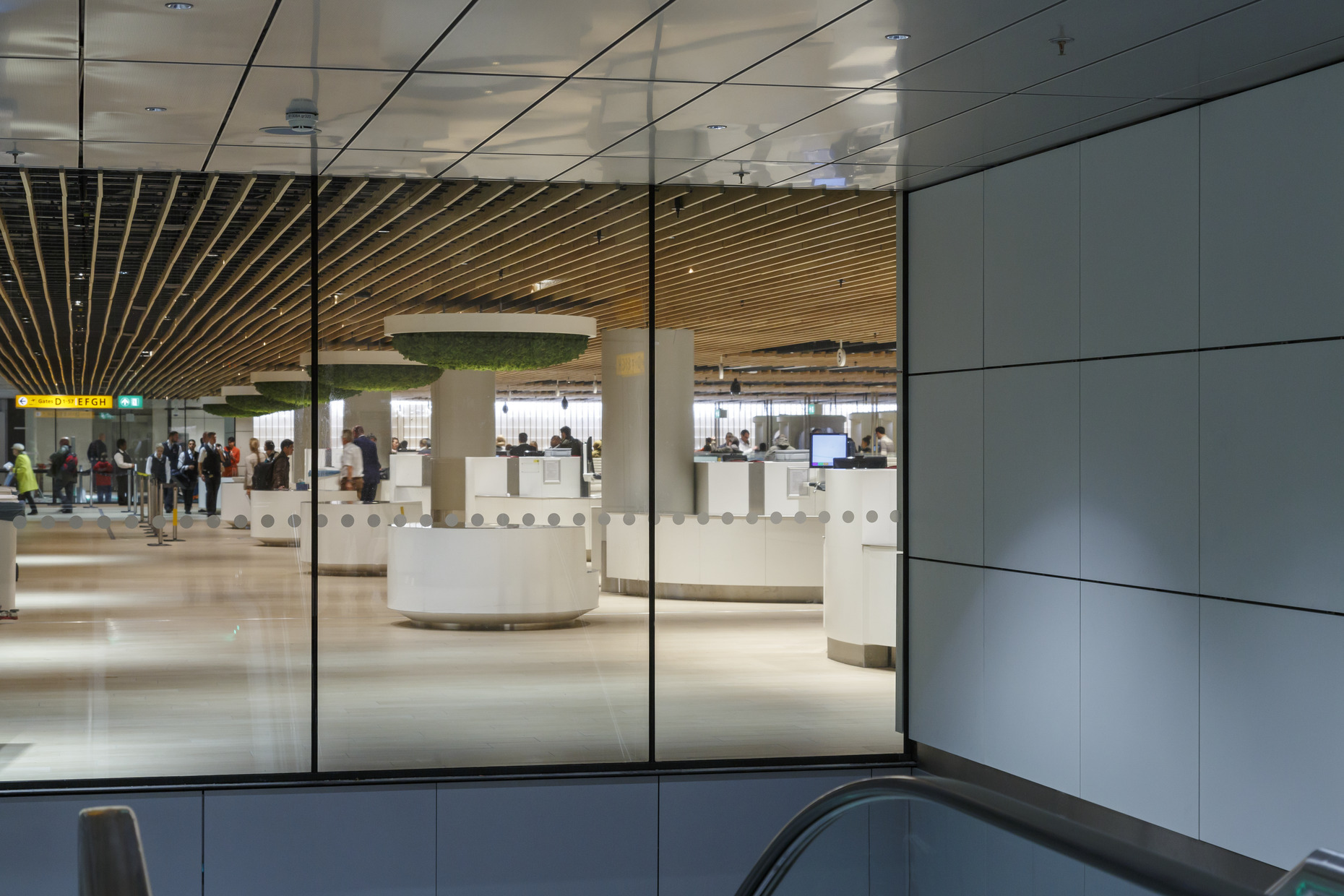
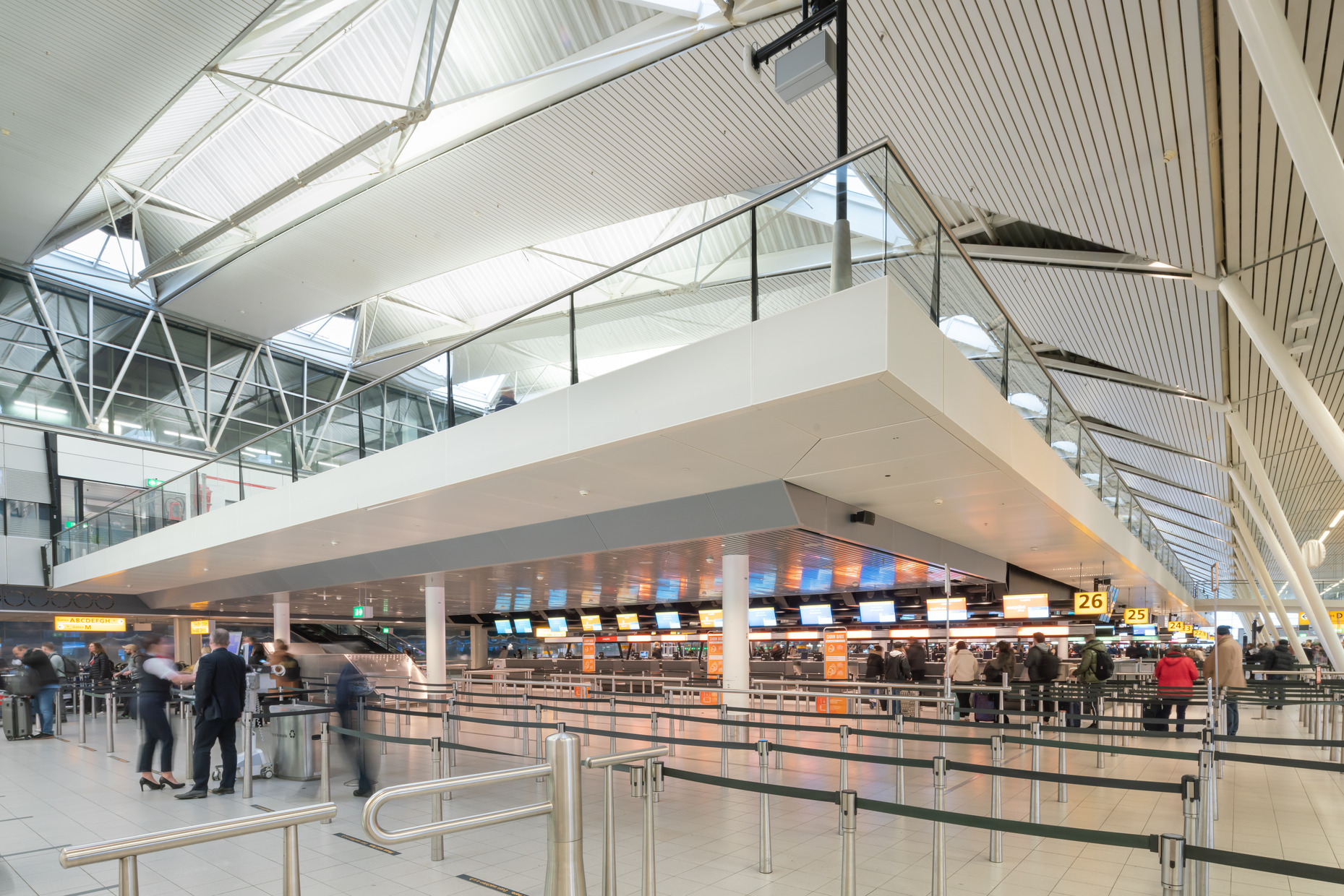
TERMINAL EXPANSION
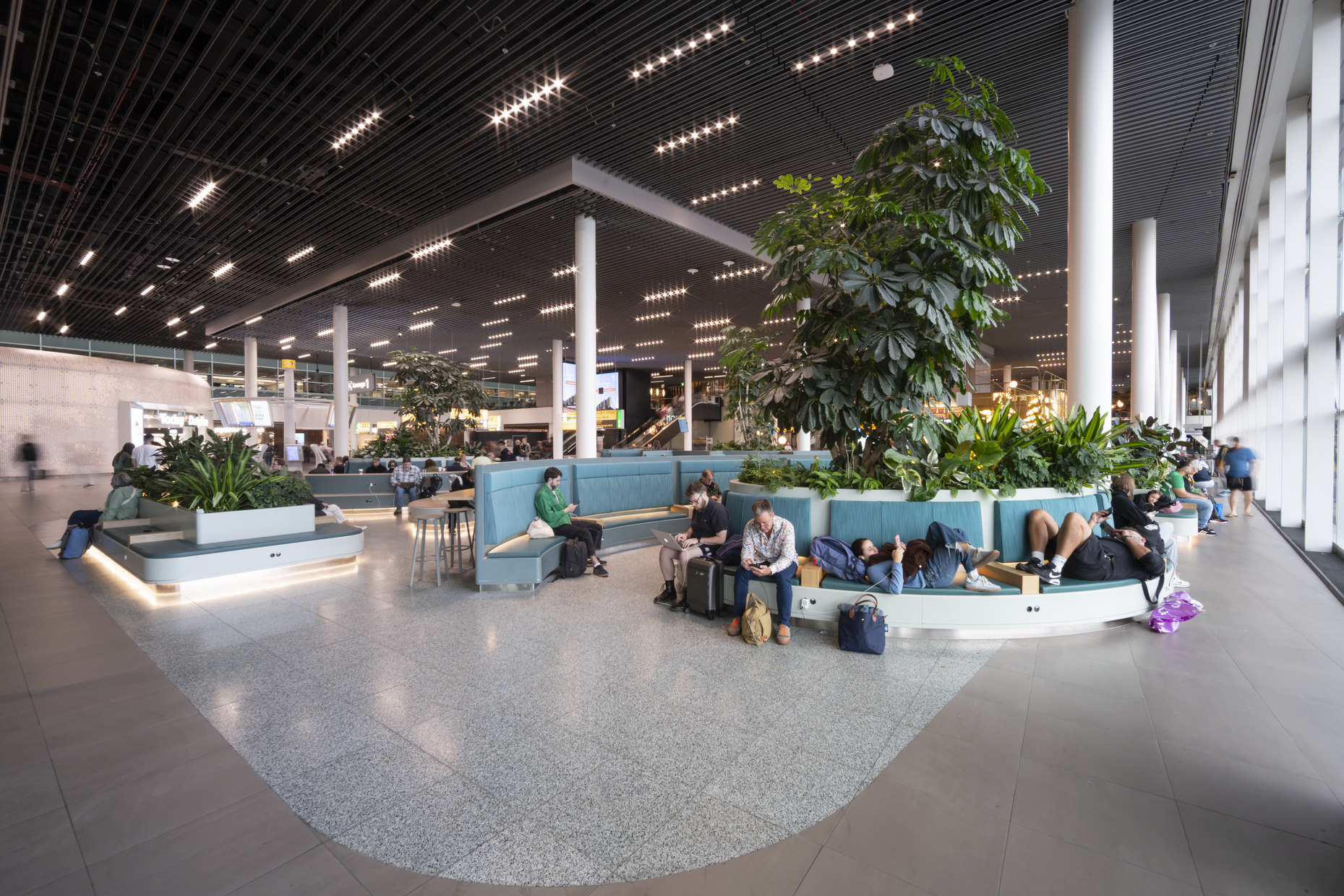
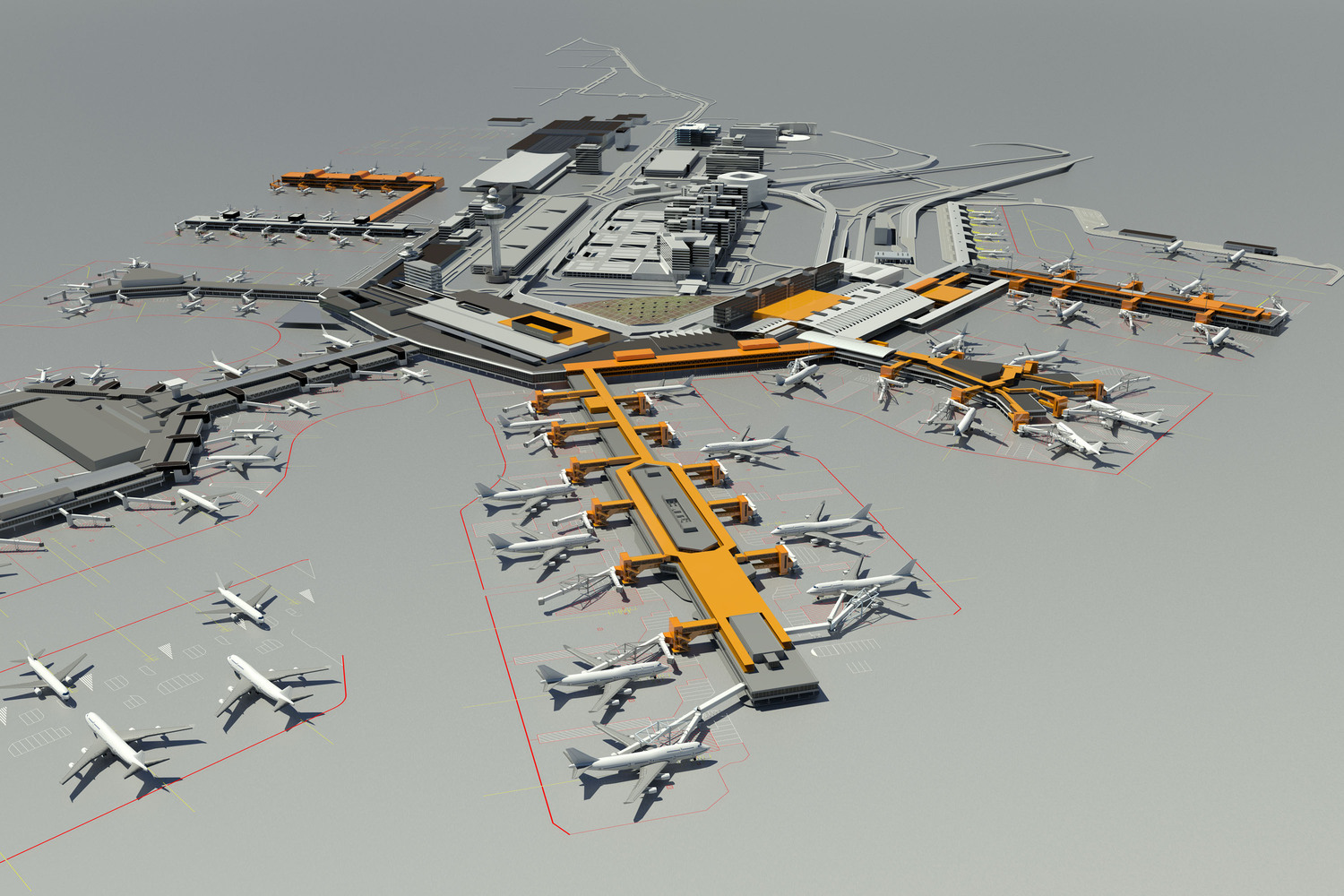
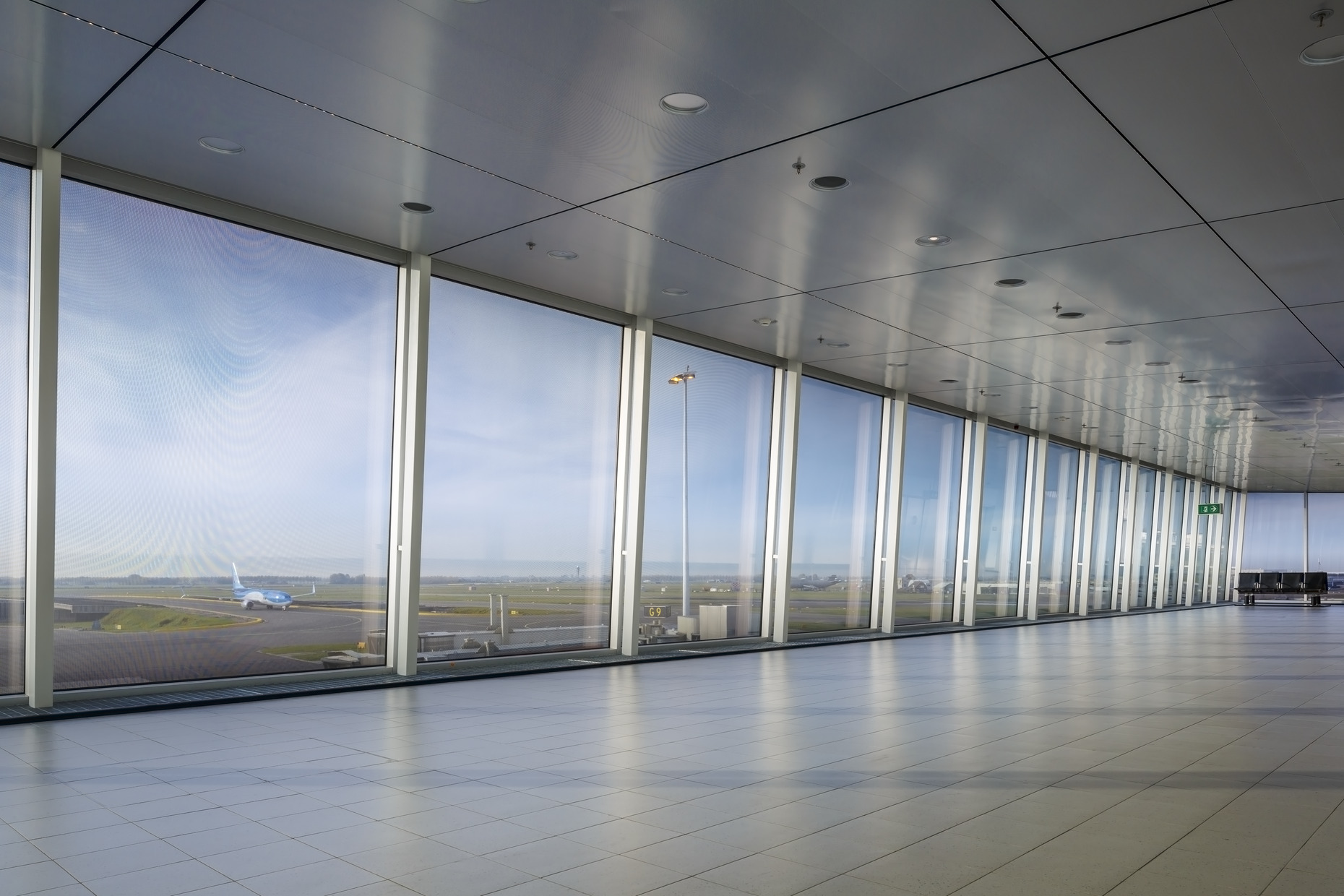
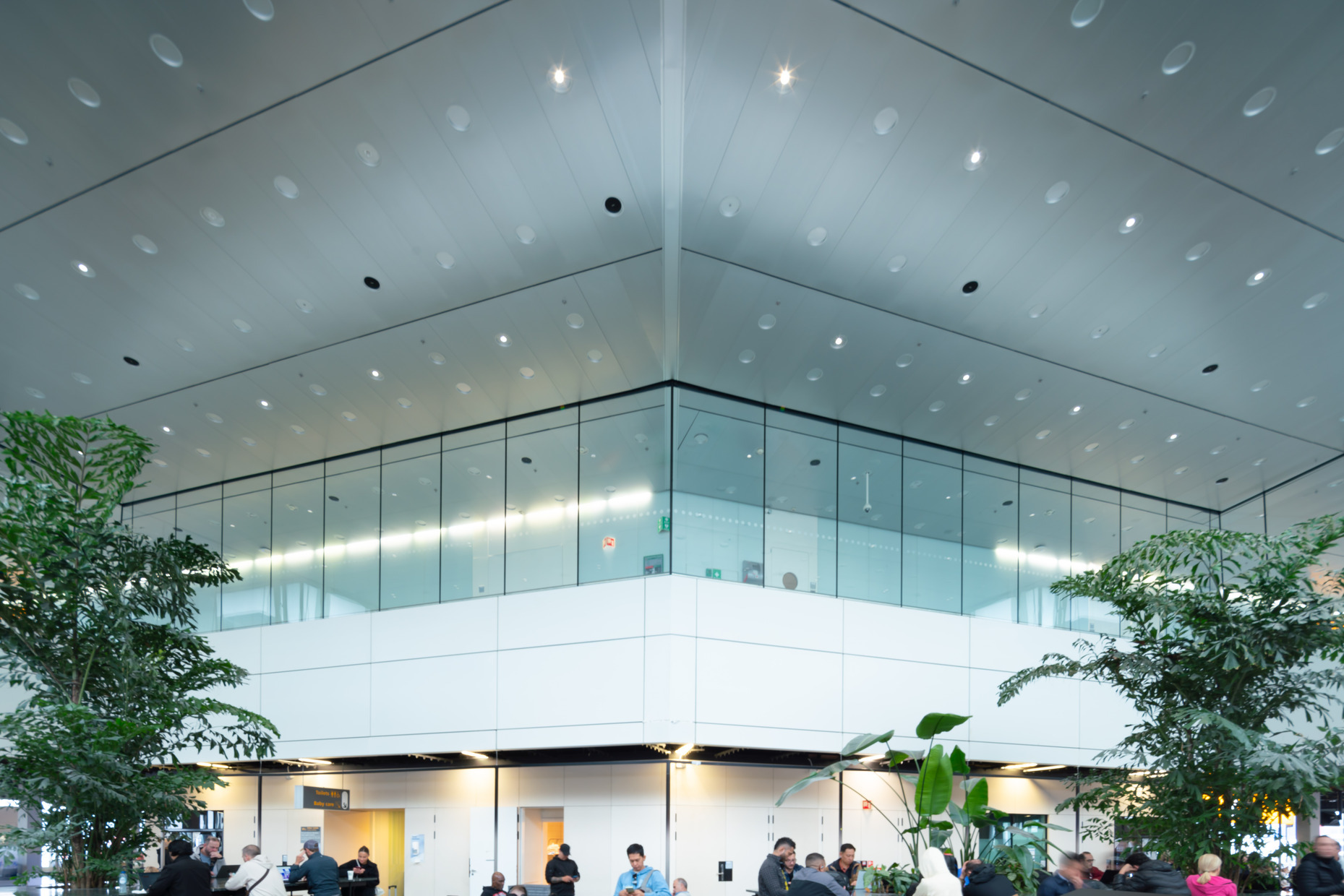
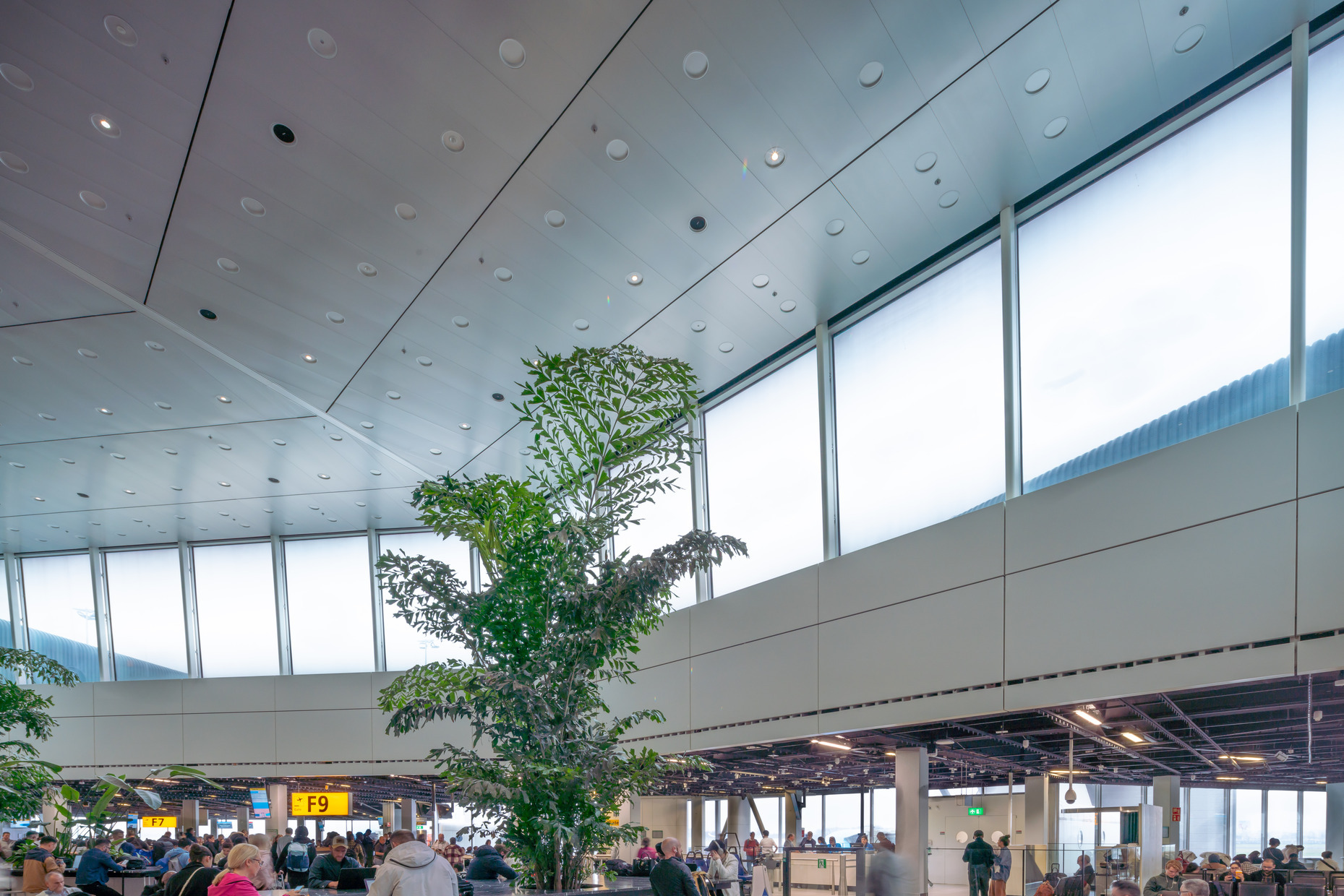
New floors on the E, F and G piers are built to facilitate the centralized security concept in the non-Schengen area. Arriving passengers who have not yet undergone the appropriate security screening are thus separated from the general passenger areas in the lounges and piers. To accommodate a centralized transfer filter, the terminal has been expanded 16 meters toward airside, spanning a 200-meter section between the centrally located E and F concourses. It offers space for the transfer security filter to centrally screen transfer passengers arriving from the non-Schengen E and F concourses, as well as additional retail, food and beverage options, and public seating in a central terminal area.
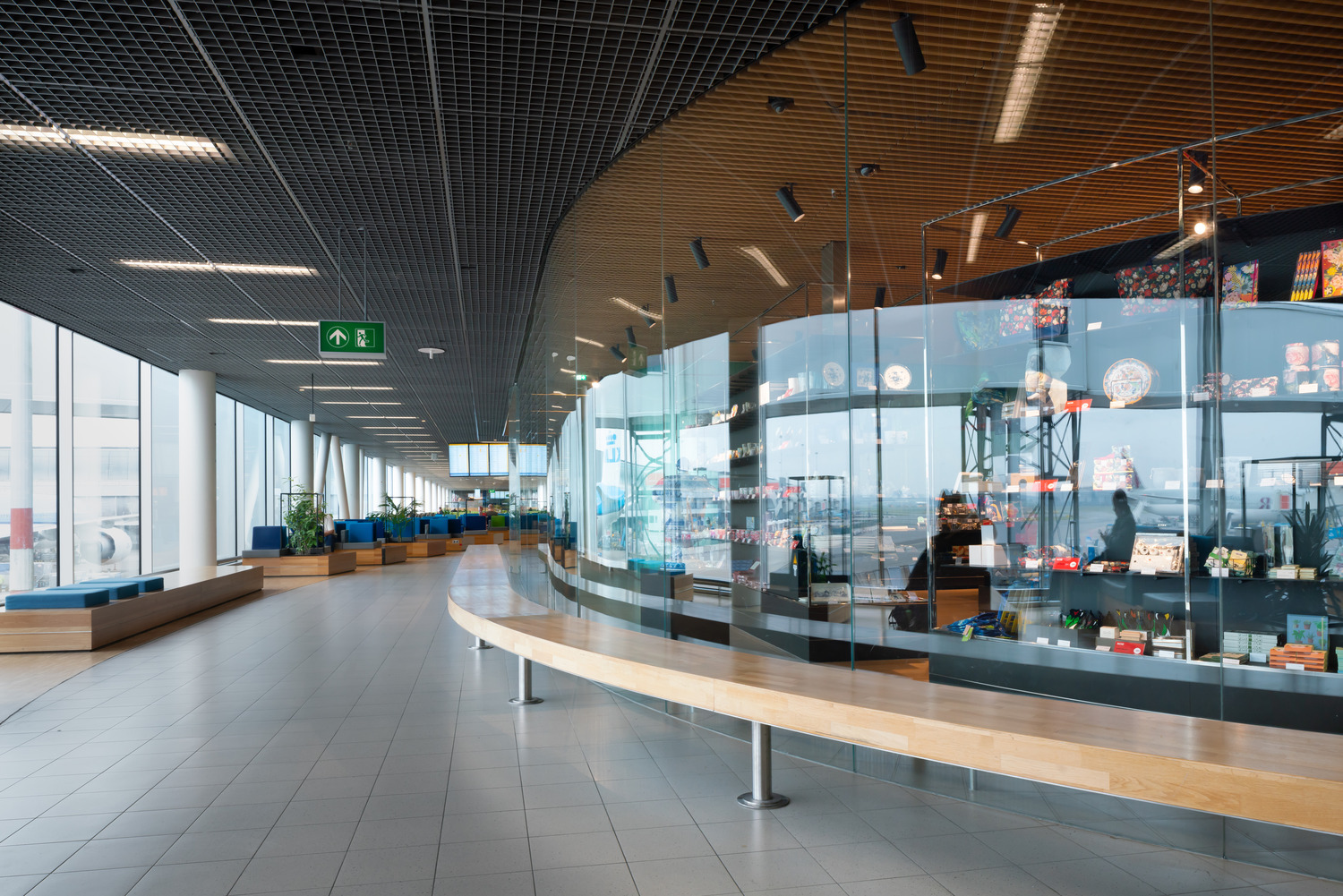
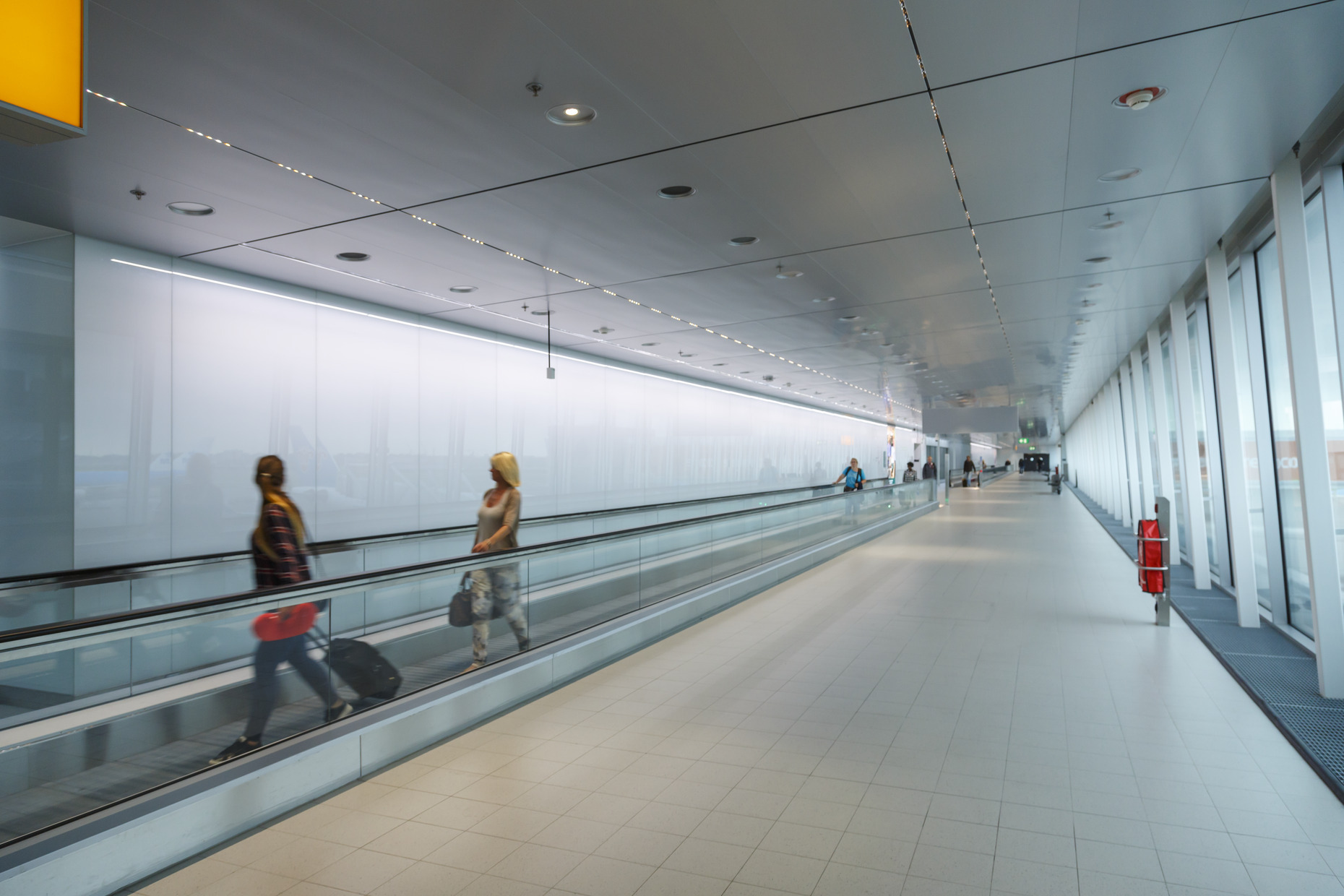
GATEHOUSES
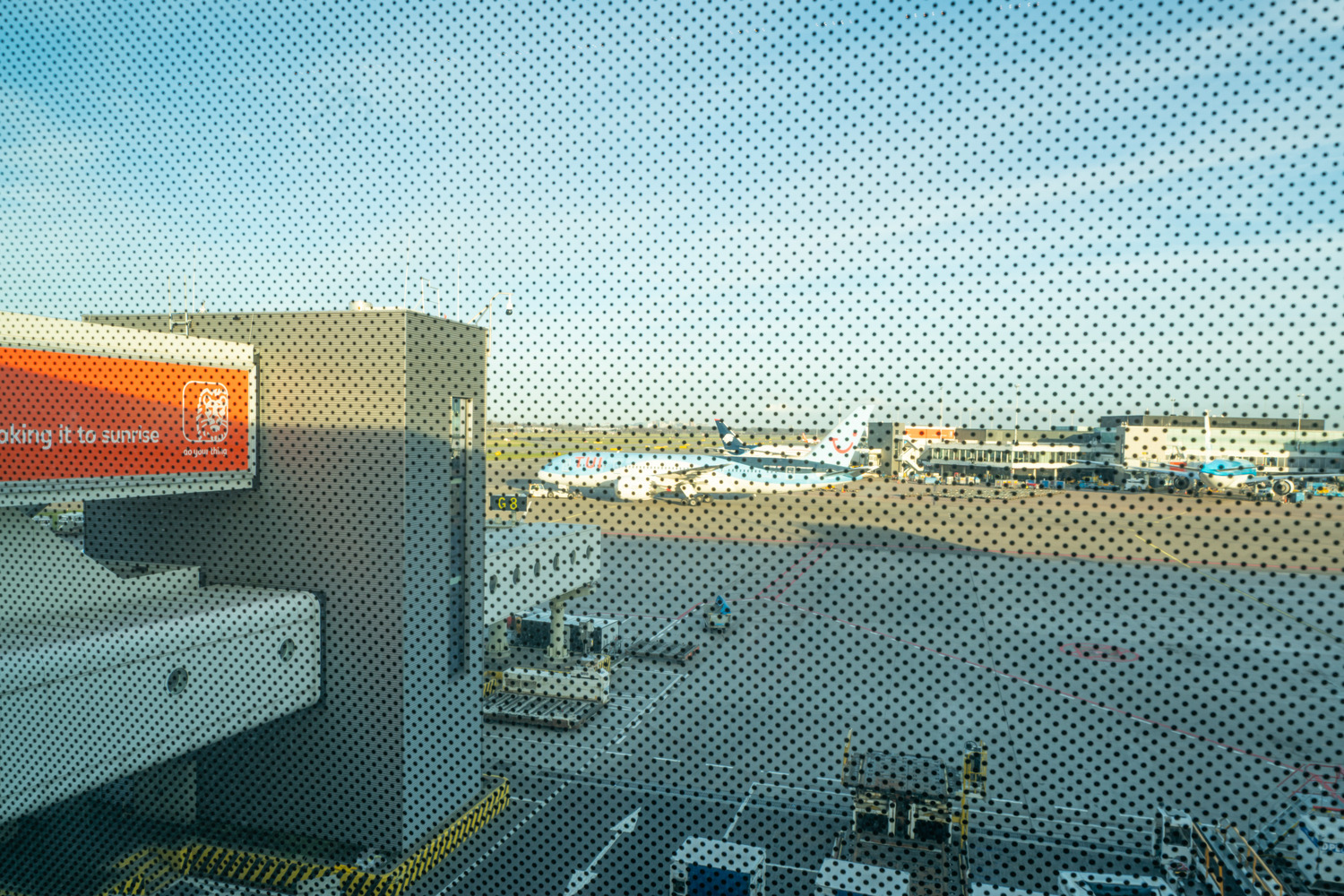
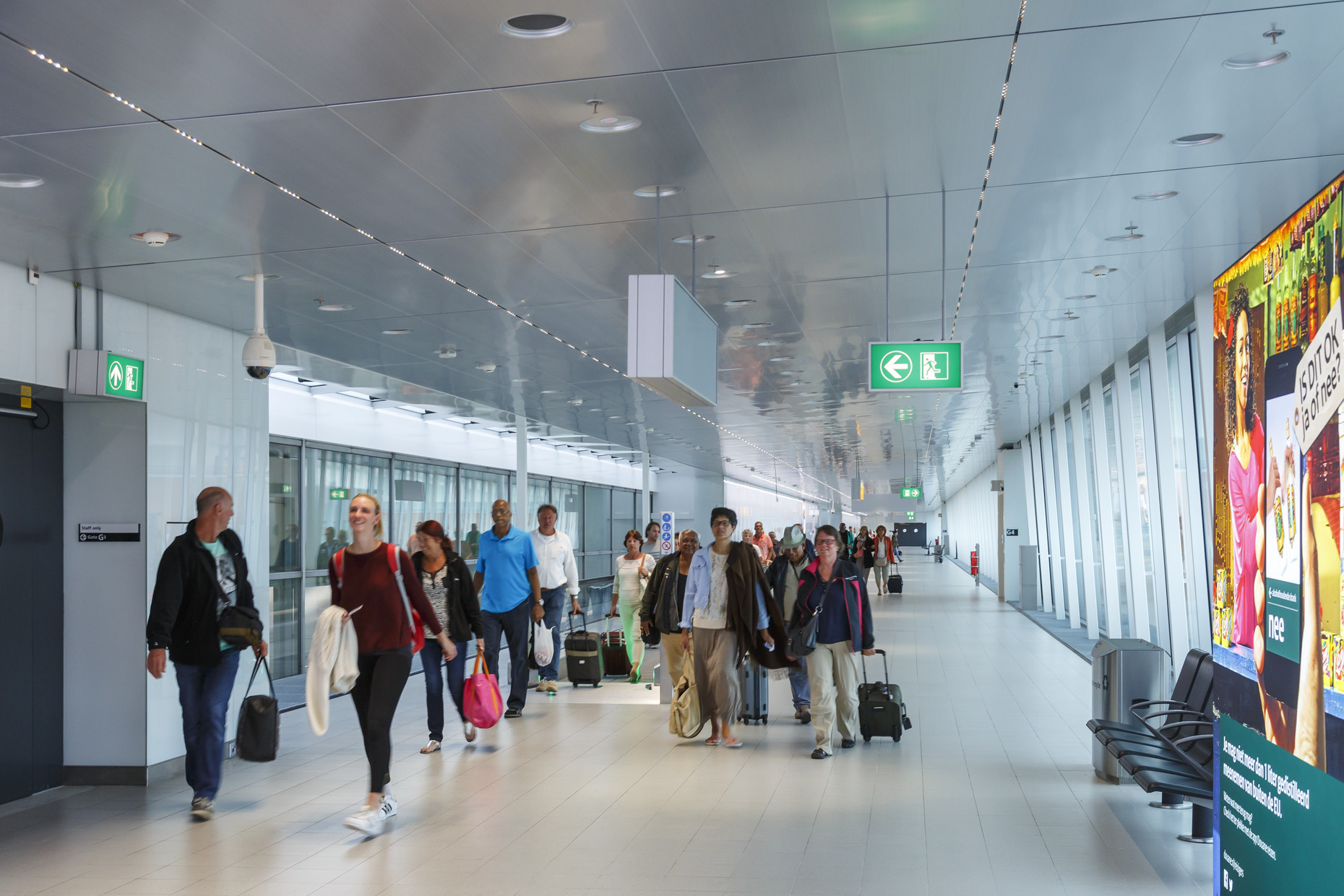
To ensure proper separation of arriving and departing passengers, new gatehouse buildings were built at 26 gates. These buildings, which were prefabricated to minimize disruption and reduce construction time, contain staircases and elevators to provide access to both the existing first Terminal floor and the newly constructed second floor on top of the terminal. Due to limited space within the gates themselves, these gatehouse buildings were installed on the platform and connected to the terminal by bridges crossing over the service road.
GH-BUILDING
The GH-building was designed to add a new immigration filter and a new transfer filter to the West Area, located near the G- and H-concourses. It exclusively handles non-Schengen passenger flows, including arrival, bus arrival from remote stands, and transfers. The ground floor immigration filter handles about 1500 peak hour passengers, and the first floor transfer filter has a capacity of 2200 peak hour passengers.
—