Schiphol Airport Plaza and Station
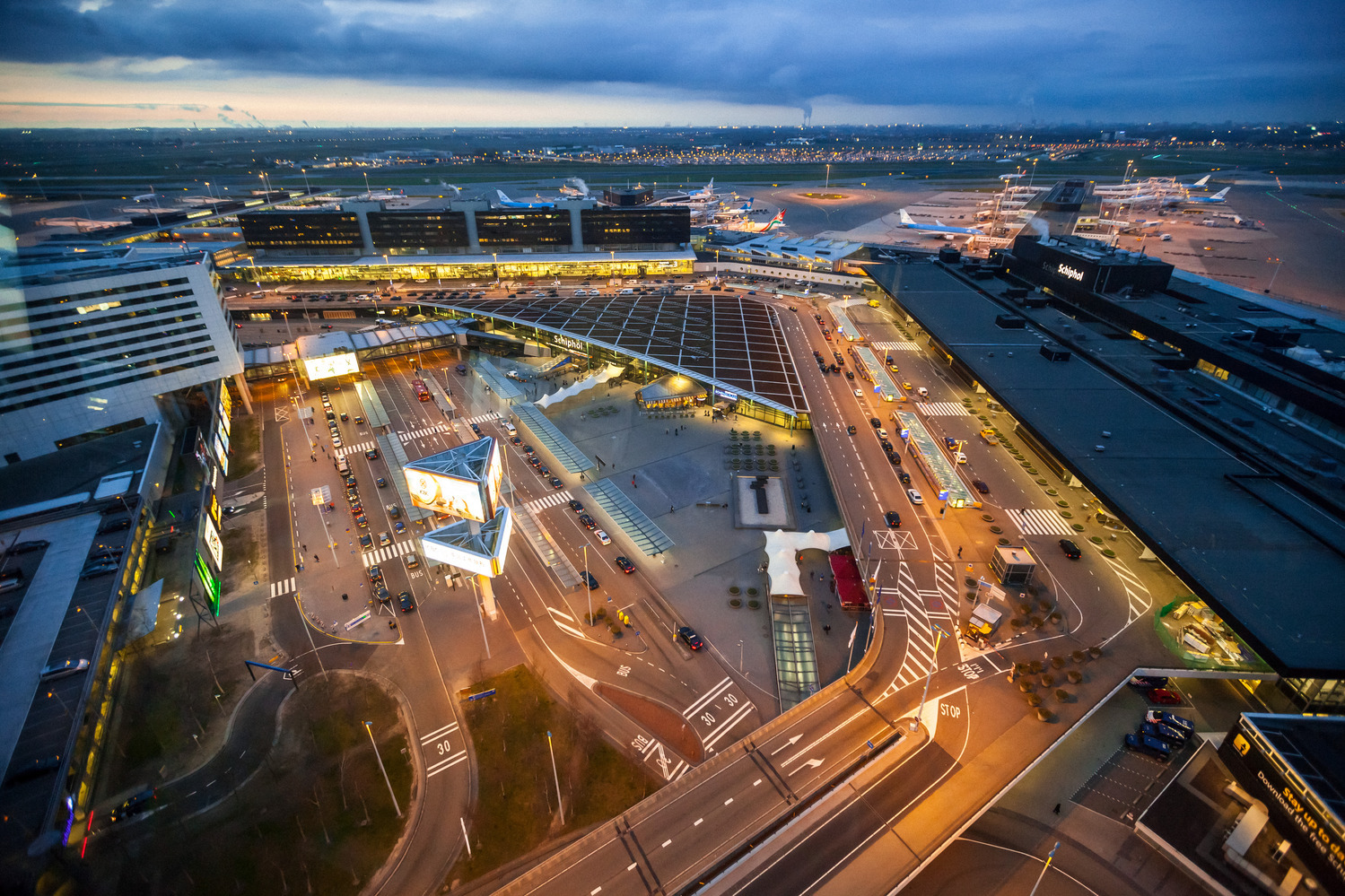
The triangular covered plaza where people enter the airport is situated above the underground train platforms of Schiphol Plaza. The sound of the underground train traffic has deliberately not been muffled entirely, in order to let people know where they are located.
Schiphol station
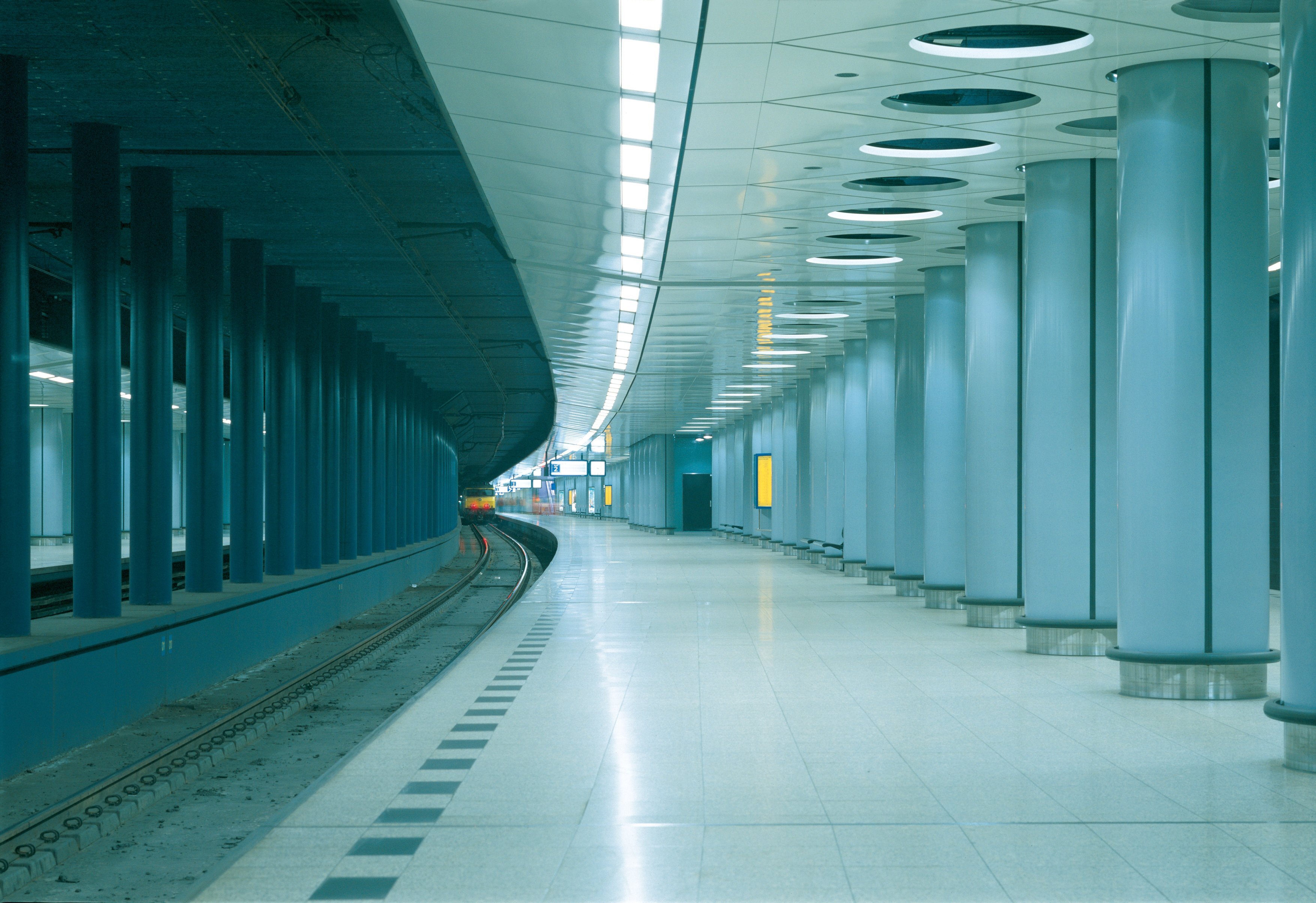
Benthem Crouwel finished the Schiphol Train Station in May 1995. The railway tunnel under the airport was doubled and the underground station now had six platforms instead of three. The platforms are 400 metres long and can accommodate the imminent arrival of the high-speed line to Paris.
The train station was no longer a separate building on the forecourt of the terminal, but was fully integrated in the terminal building itself.
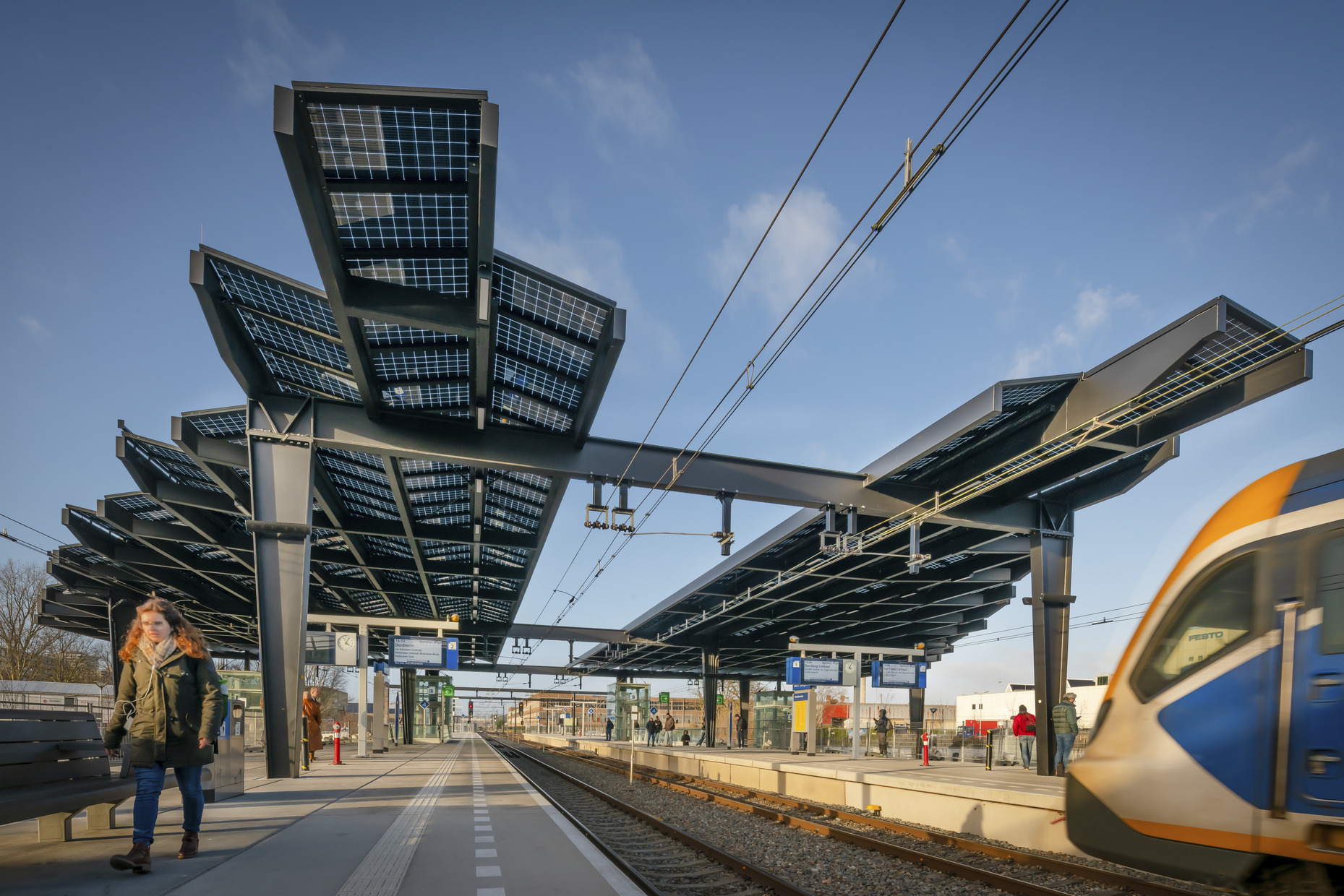
The ‘Schiphol-experience’ already starts on the platform. The Schiphol station platforms are located underneath Schiphol Plaza. The station's six platforms are accessible via twelve escalators and three elevators located in the main concourse of the airport. The principles of calm and clarity were applied. The platforms contrast like a light, gleaming band with the darker, matt appearance of the railway tracks.
Within only a couple of minutes using the escalator or lift you can walk straight towards the check-in desk of Departure Halls 1, 2 or 3. The roof of the platforms protrude from the floor of the plaza and consists of metal sections with round holes that improve the acoustics and hide fittings from the beholder’s eye.
—
Plaza
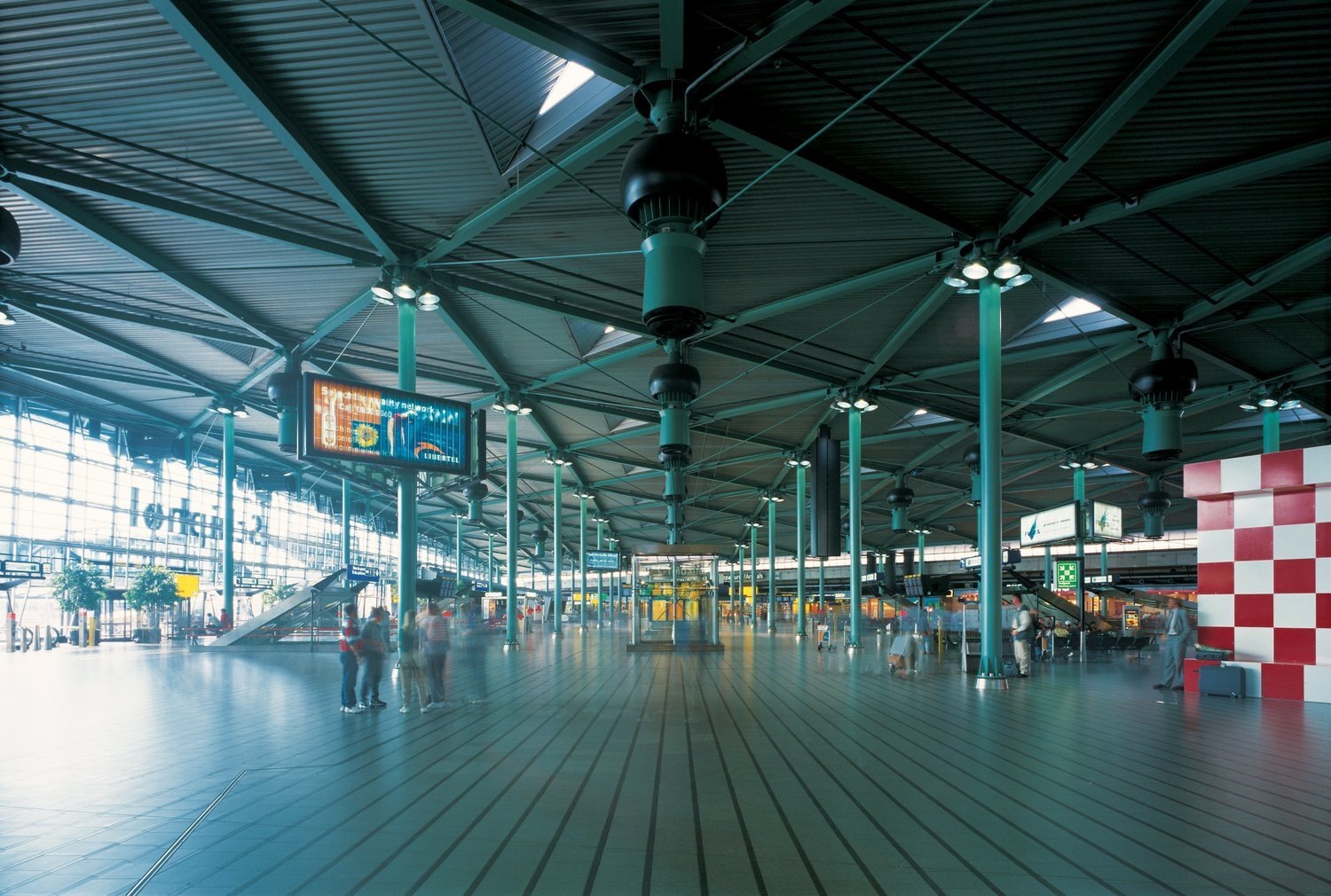
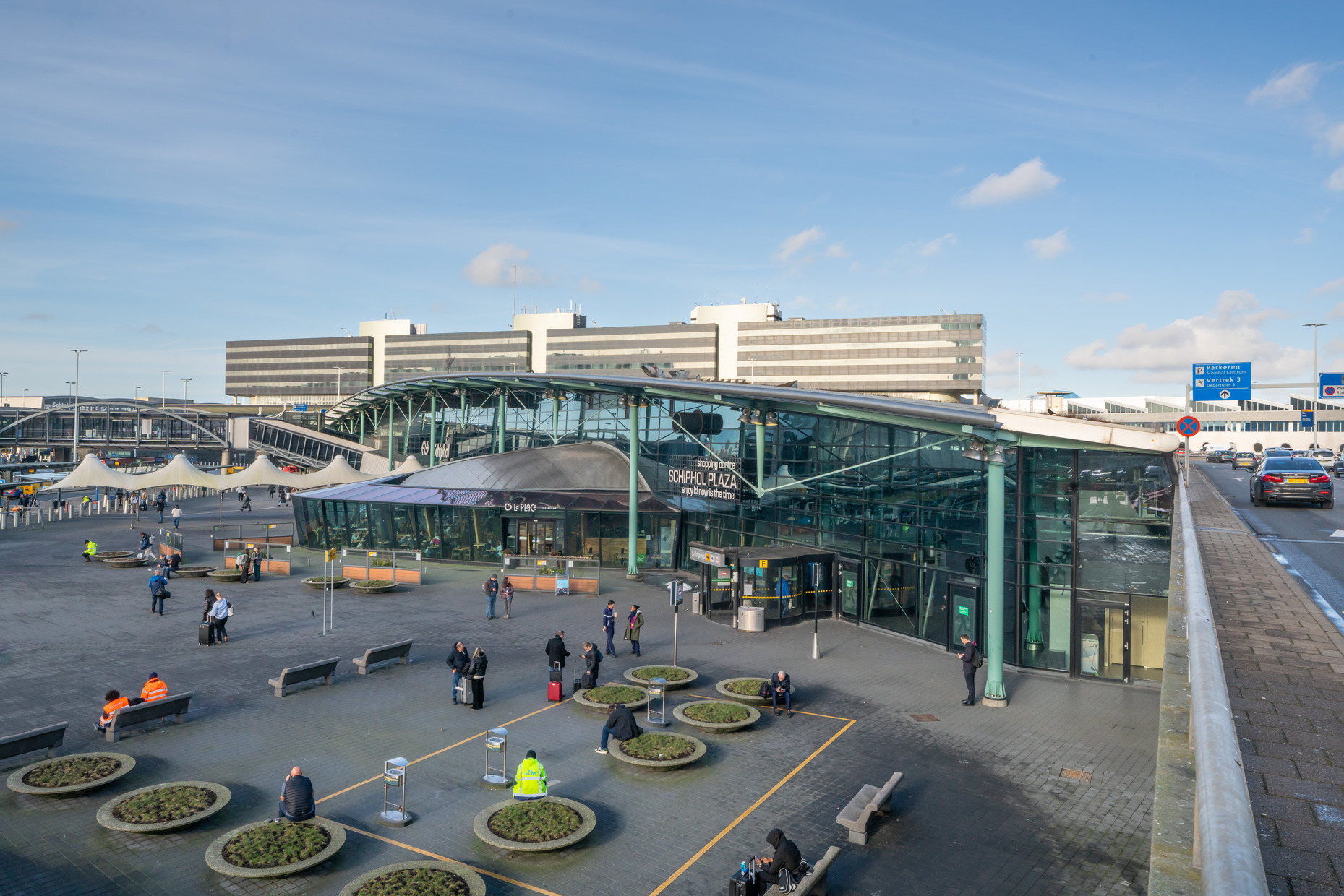
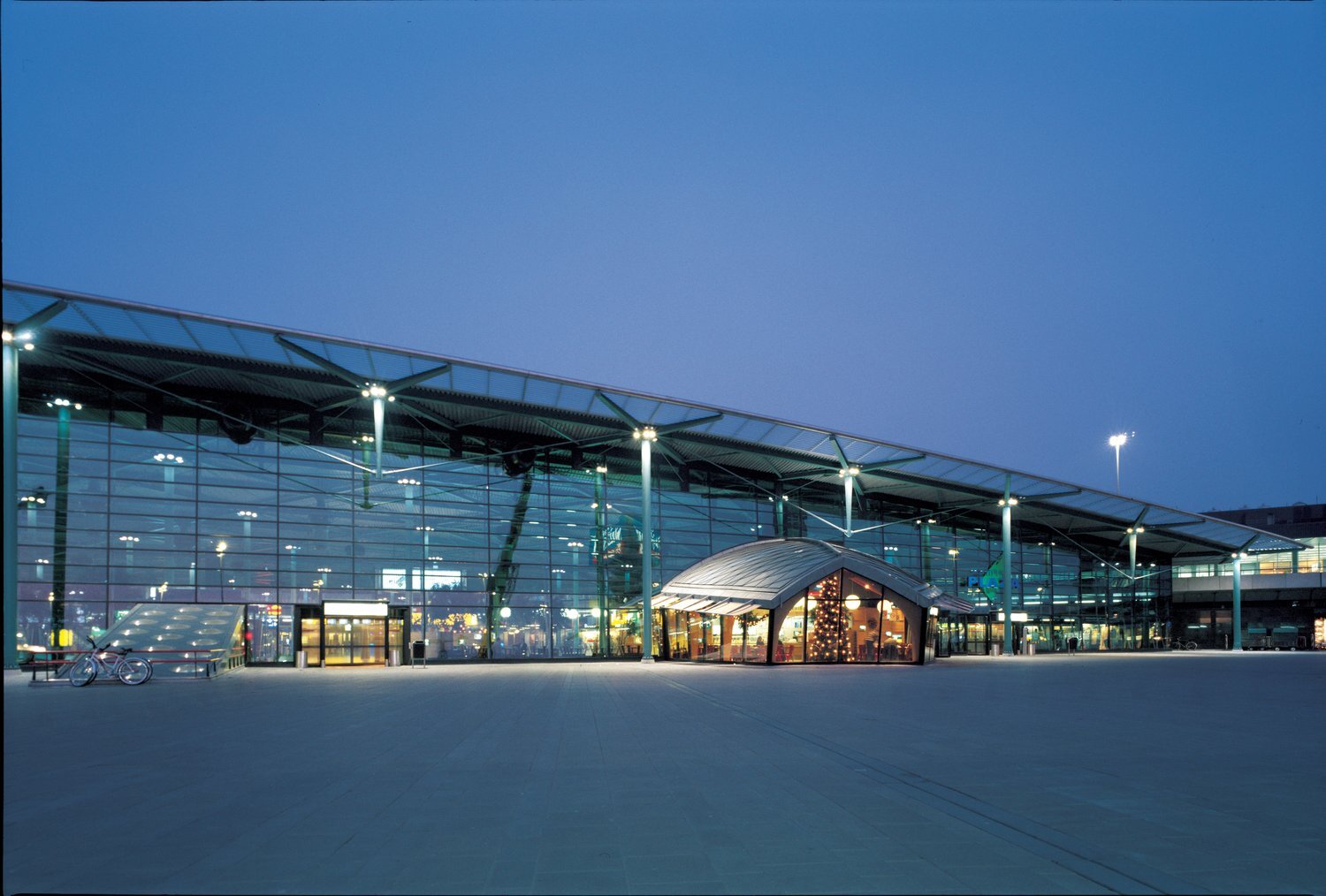
The plaza forms the main entrance to the airport for travelers arriving by public transport. Its design gives it the feel of an urban square, made up of two key elements: the plaza itself and the shopping corridor that extends beyond it. This space serves both as a meeting point and as a small shopping center, offering 2,000 m² of retail space.
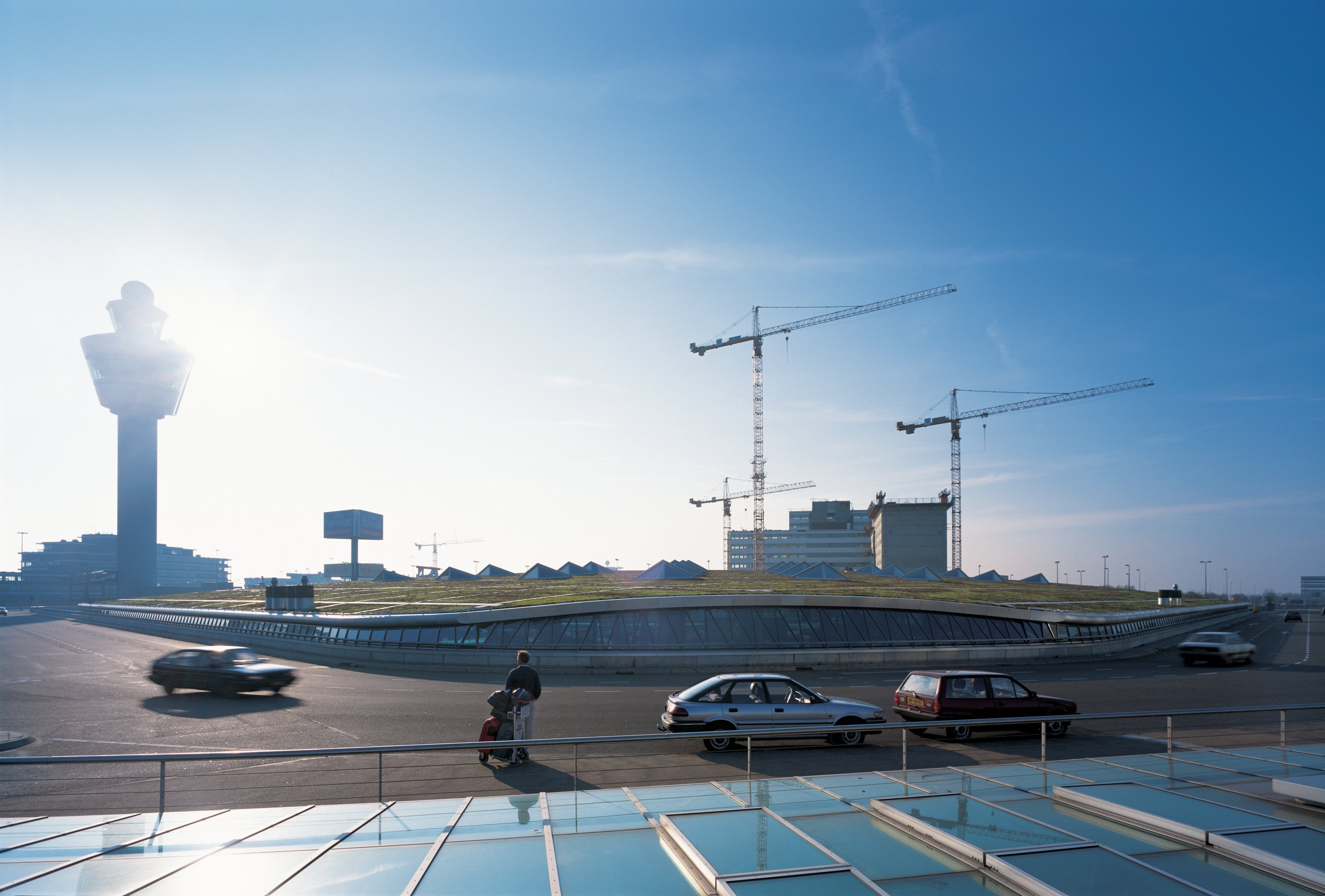
A new, light-filled arrivals hall was created by adding a glass roof over the airport forecourt. The curved roof is supported by a light steel structure with green, lamp-like columns that contain integrated lighting. The roof is covered with moss and sedum, helping to regulate the indoor climate.
Clear, large-scale signage makes it easy for travelers to orient themselves and find their terminal from a distance. The landside shopping corridor, located just beyond the plaza, runs perpendicular to the main flow of people heading toward the arrival or departure halls.
The remaining open-air section of Dellaertplein, featuring plant containers and a pond, functions as a second urban square.
—
Terminal for planes and trains
Removing part of the ground floor of the two arrivals halls has generated a terminal not just for planes, but for trains as well. Only a limited height between these two functions needed bridging. The roof curves upwards to create a roofed footbridge which leads to the new parking facilities, hotels and office complexes.
—